

Rawanduz
Overview and Location
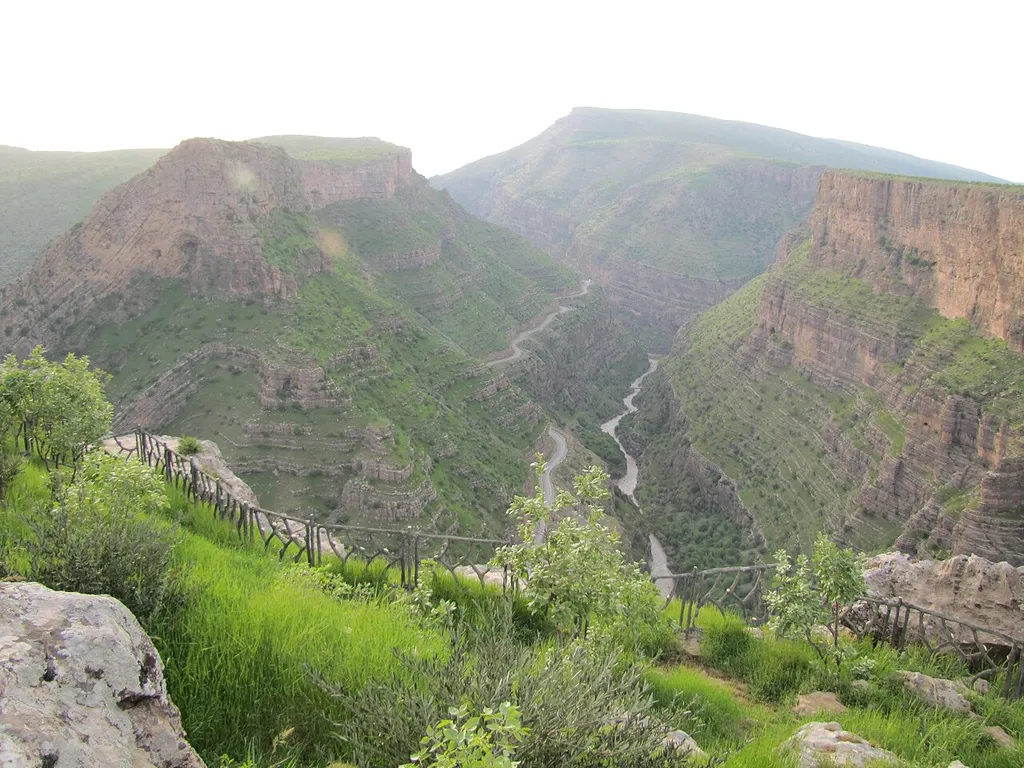
Perched more than five hundred meters above sea level at the heart of the Zagros Mountains in Erbil Governorate, Iraqi Kurdistan, Rawanduz sits approximately 120 kilometers northeast of Erbil. The city is encircled by four great peaks — Korek Mountain to the south, Hindren to the north, Zozik to the west, and Bradasot to the east — forming a natural fortress that has defined the city's character for millennia. Built dramatically on the edge of a cliff, Rawanduz seems suspended between sky and stone, while the Greater Zab River winds through the deep gorges far below.
First-time visitors to Rawanduz often say the same thing: they could not believe they were in Iraq. The verdant, mist-touched mountains, plunging valleys, and cool, clean air evoke the landscapes of Switzerland or Austria. This is one of Iraqi Kurdistan's best-kept secrets — a place that rewards the traveler who ventures beyond the expected, with some of the most extraordinary mountain scenery in the entire Middle East.
Ancient Roots and the Soran Emirate
The very name Rawanduz tells a story. Derived from the Kurdish for "fortress of the Rawand," it honors the noble Kurdish family from whom the city takes its identity. The area's recorded history stretches back to the Neo-Assyrian Empire, when it lay along the great trading route to Nineveh between the 10th and 7th centuries BC. Some historians further identify the site with the ancient capital of the Urartu state of Musasir, around 722–705 BC — a claim that, if confirmed, would deepen its historical significance enormously.
Rawanduz rose to regional prominence as the capital of the Soran Emirate, which flourished from 1399 to 1835. By the early 19th century, the emirate had reached its zenith: the city hosted weapons factories, a mint for coining money, and a vibrant bazaar. In 1924, Rawanduz became the birthplace of Zhiri Kurmanci, one of the earliest Kurdish-language literary magazines, published by the poet Huzni Mukryani — a reminder that this city was as much a cultural beacon as a military stronghold.
The Gorge and the Waterfalls
Just beyond the city's edge, one of Asia's great natural spectacles unfolds: Rawanduz Gorge. Stretching more than twenty kilometers, this geological marvel cuts between soaring cliffs, rust-red rock faces, and river water glinting far below. The New Zealand engineer Archibald Hamilton, who knew these landscapes better than almost any outsider of his era, declared it the finest gorge in Asia — and visitors who stand at its rim today understand why. The canyon makes several sharp turns, each bend revealing a different palette of color and light, and is often compared in scale and drama to the Grand Canyon.
The gorge is flanked by two waterfalls of national renown. Geli Ali Beg Waterfall, whose image graces the 5,000 Iraqi dinar banknote, thunders against a backdrop of sheer mountain walls. Bekhal Waterfall, ten kilometers west of Rawanduz, flows year-round from mountain springs over limestone formations draped in green. Restaurants have been built directly over the rushing water at Bekhal, making a meal here one of the most immersive dining experiences in all of Kurdistan.
Adventure and Exploration
Rawanduz is not only a destination for contemplation — it is a paradise for the adventurous. Korek Mountain, served by a four-kilometer cable car, draws hikers and skiers alike: in summer, it offers cool mountain air and panoramic views across the Zagros range; in winter, it transforms into a ski resort ranked among the finest in Iraqi Kurdistan. Along the length of Rawanduz Gorge, hiking trails thread through wooden bridges and traditional Kurdish villages that have changed little in centuries, offering an authentic glimpse into local architecture, cuisine, and festival traditions.
No visit would be complete without driving the legendary Hamilton Road, built between 1928 and 1932 under the direction of engineer Archibald Hamilton to connect Erbil with the Iranian border across forbidding mountain terrain. Hamilton later documented the experience in his book Road Through Kurdistan, and the road itself remains a feat of engineering as dramatic as the landscape it traverses. For families, the Pank Tourist Resort — Iraq's first such resort, opened in 2007 — provides rides, restaurants, and recreational facilities in a stunning mountain setting.
Visitor Tips and Best Time to Go
Spring (March to May) and autumn are the best seasons to visit Rawanduz, when the mountains are at their most lush and the waterfalls run at full strength. Summer attracts heavy domestic tourism, particularly from central and southern Iraq, while winter offers the unique appeal of skiing on Korek Mountain. Rawanduz is approximately two hours by car from Erbil along a well-paved and scenically rewarding road. Accommodation ranges from guesthouses to mountain resorts, and local Kurdish restaurants serve hearty traditional dishes — dolma, grilled meats, and freshly baked flatbread. Kurdish (Sorani and Kurmanji) is widely spoken, with Arabic understood in most tourist areas.
Rawanduz Gorge
Stretching over twenty kilometers through soaring cliffs and rust-red rock, Rawanduz Gorge has been called the finest gorge in Asia. With the Greater Zab River threading the valley floor and the canyon making dramatic turns at every kilometer, it rivals the Grand Canyon in sheer spectacle — and almost no one outside Kurdistan knows it exists.
Bekhal Waterfall
Fed by mountain springs, Bekhal Waterfall spills over limestone formations ten kilometers west of Rawanduz, flowing in every season without exception. Restaurants built directly over the rushing water make dining here a genuinely immersive experience, while the cool mist and surrounding greenery offer welcome relief during Iraq's hot summers.
Geli Ali Beg Waterfall
Famous enough to appear on the 5,000 Iraqi dinar banknote, Geli Ali Beg is a symbol of Kurdistan's natural splendor. Set against the dramatic walls of Rawanduz Gorge, its thundering cascade against sheer mountain cliffs creates one of the most photographed scenes in northern Iraq.
Korek Mountain
Rising to the south of Rawanduz, Korek Mountain is served by a four-kilometer cable car that carries visitors from the Bekhal valley floor to panoramic summit views. In summer it is a cool mountain escape; in winter it becomes one of Iraqi Kurdistan's top-rated ski resorts, drawing visitors from across the country.
Hamilton Road
Built between 1928 and 1932 by New Zealand engineer Archibald Hamilton, this mountain highway was carved through terrain so forbidding that its very existence remains astonishing. Hamilton immortalized the project in his book <em>Road Through Kurdistan</em>, and driving the road today — with its hairpin turns and sheer drops above the gorge — is an adventure in itself.