

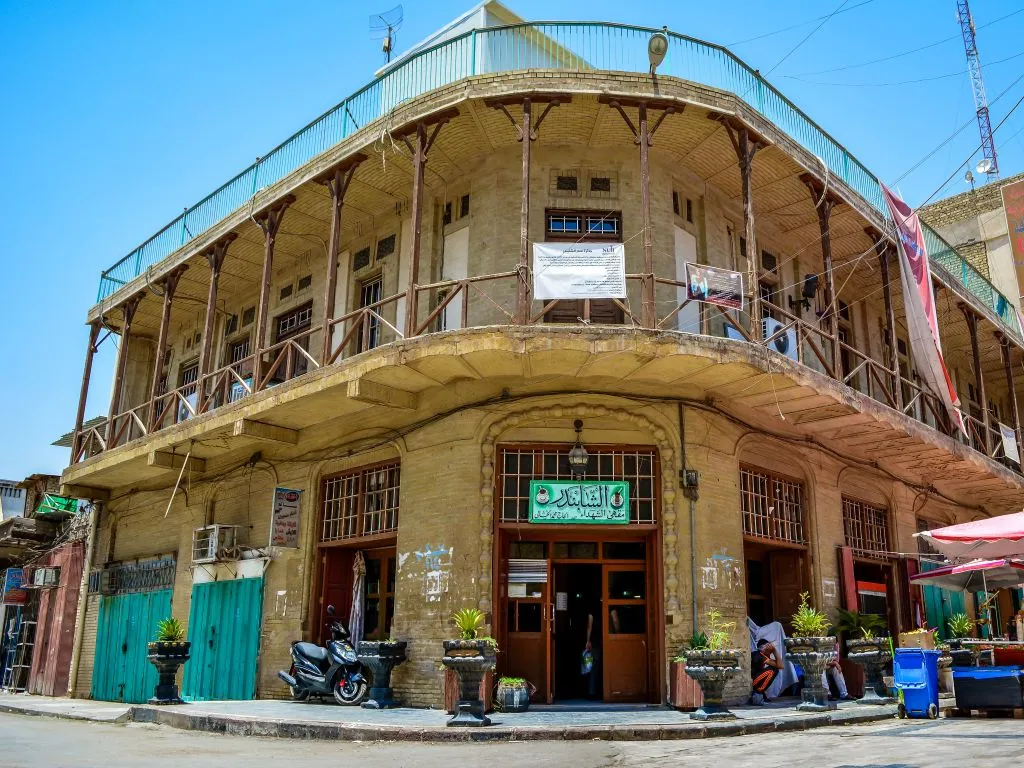
Shabandar Café
Al-Shabandar Café: The Memory of Baghdad and a Landmark of Literature and History
Al-Shabandar Café is one of the most iconic heritage cafés in Baghdad and a major cultural landmark located in the heart of Al-Mutanabbi Street, the most important cultural hub in Iraq. Over the decades, the café has become a symbol of Baghdad\'s identity and a gathering place for writers, intellectuals, and artists.
Historical Background
The café was established in the early 20th century inside a building that is more than 100 years old. Originally a printing house owned by the Shabandar family, it later transformed into a traditional Baghdadi café. Throughout its history, the café has witnessed major events and remained standing despite wars and challenges.
The Tragedy of 2007
In 2007, Al-Shabandar Café was struck by a tragic terrorist bombing that claimed the lives of many visitors, including several sons of its owner, Haj Muhammad al-Khushali. Despite the immense loss, he reopened the café, turning it into a symbol of resilience and the unbreakable spirit of Baghdad.
Atmosphere and Experience
Visitors to Al-Shabandar Café are welcomed by an authentic Iraqi ambiance:
- Old wooden chairs
- Historic photographs decorating the walls
- Coal-brewed “Adani tea”
- Intellectual conversations
- The lively crowds of Al-Mutanabbi Street every Friday
Today, it is a must-visit destination for Iraqis and tourists alike, offering a nostalgic window into Baghdad\'s past.
Cultural Role
The café is more than a place to drink tea—it is a cultural salon. It has hosted book signings, press interviews, literary discussions, and countless photographs featuring Iraqi cultural icons.
A Symbol That Lives On
Al-Shabandar Café represents a mixture of sorrow and pride, memory and hope. It embodies the spirit of Baghdad: a city that rises again no matter how harsh the challenges.