

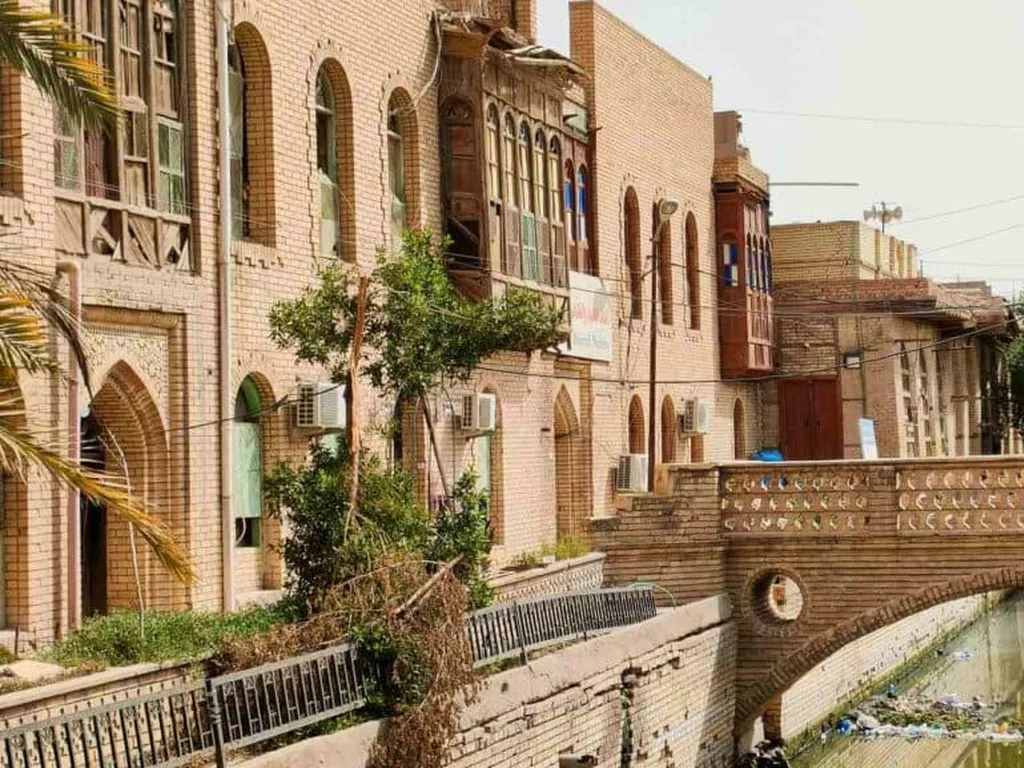
Basra City — Pearl of Southern Iraq
The Pearl of the South: Location and Overview
Perched at the southern tip of Iraq, Basra unfolds along the banks of the Shatt al-Arab — the majestic waterway born where the Tigris and Euphrates rivers embrace before flowing together into the Persian Gulf. This singular geography has made Basra one of history's great crossroads: a city where Mesopotamia meets the sea, where Arab, Persian, Indian, and African cultures have mingled for over fourteen centuries. Iraq's second-largest city and its principal port, Basra carries the weight of empires and the warmth of a thousand stories.
Once celebrated as the "Venice of the Middle East" for its intricate web of canals and waterways, Basra retains an irresistible character that sets it apart from every other Iraqi city. Its palm-lined riverbanks, ornate wooden shanasheel balconies, bustling souqs, and legendary seafood tables offer a depth of experience that rewards every curious traveler willing to venture off the beaten path.
Centuries of History: From Islamic Conquest to Golden Age
Founded in 636 AD by the companion of the Prophet, Utbah ibn Ghazwan, under the command of Caliph Umar ibn al-Khattab, Basra began as a military encampment that swiftly transformed into one of the most dynamic cities of the early Islamic world. During the Abbasid Caliphate, the city flourished as a center of learning, literature, and philosophy. Renowned grammarians, theologians, and poets shaped the Arabic language in Basra's famed intellectual circles, leaving an imprint on Islamic civilization that endures to this day.
Basra also fired the imagination of storytellers across centuries. It is the legendary homeport of Sinbad the Sailor, whose seven impossible voyages began here on the banks of the Shatt al-Arab and swept him to the edges of the known world. That same spirit of adventure and wonder lingers in Basra's soul, waiting to be rediscovered. The city later passed through Mongol invasions, Ottoman rule, and the upheavals of the modern era — each chapter adding another layer to the rich, layered identity of this extraordinary place.
The Shatt al-Arab: Soul of the City
No visit to Basra is complete without surrendering to the magic of the Shatt al-Arab. This grand river, formed at the confluence of the Tigris and Euphrates, is the lifeblood around which the city breathes. Its banks are lined with towering date palms — producing some of the finest dates in the world — while traditional wooden mashoof boats glide silently across its surface, unchanged in form for generations.
Basra's riverside Corniche promenade stretches along the Shatt al-Arab, offering visitors a beautiful walkway punctuated by local tea houses, fish restaurants, and manicured gardens where families gather in the cooler evenings. A boat cruise on the river at dusk, with the golden light fading across the water and the distant call to prayer drifting through the palms, is among the most serene and moving experiences southern Iraq has to offer.
Landmarks and Cultural Sites: Basra's Timeless Treasures
The Basra Museum is one of Iraq's finest, housed dramatically in a former presidential palace on the riverfront. Its halls hold thousands of artifacts spanning Sumerian, Babylonian, Assyrian, and Islamic civilizations — some dating back over 6,000 years — presented in a space that carries its own remarkable history. The museum alone justifies a journey to the south.
The ancient Imam Ali Mosque — the Old Mosque of Basra — stands as a testament to the earliest chapter of Islam outside the Arabian Peninsula. Built in the very first decades of the faith, this is among the oldest mosques on earth, and its austere grandeur invites deep contemplation. Nearby, the historic Old City neighborhood preserves the elegant shanasheel architecture unique to Basra: elaborately carved wooden bay windows projecting over narrow alleys, allowing air to flow and privacy to be maintained in the southern heat. And just 74 kilometers northwest, the small town of Al-Qurnah marks the legendary confluence of the Tigris and Euphrates — long identified in local tradition as the site of the Garden of Eden. A quiet park protects the ancient, gnarled Tree of Knowledge, where visitors come to stand in the presence of myth.
Flavors, Festivals, and Living Traditions
Basra's culinary scene is as layered as its history. The city's proximity to the Persian Gulf means fresh seafood defines its tables — from the famous masgouf grilled river fish to spiced Gulf shrimp and rich fish stews. Arabic, Persian, and Indian culinary traditions have blended over centuries to produce a distinctive Basrawi cuisine, and local sweet shops offering madgooga — compressed date balls rolled in coconut, sesame, and nuts — are an unmissable indulgence. Basra is also globally renowned for producing some of the world's finest dates, with varieties sought by connoisseurs across the Arab world and beyond.
The city's cultural calendar is rich with events. The Basra International Film Festival, held each December, celebrates regional cinema. The Basra Book Fair in March draws intellectuals and readers from across Iraq. The Ashura commemorations, observed with profound devotion each year, offer visitors a window into the city's deep spiritual life. Basra is also the guardian of the maqam musical tradition — a classical form of Arabic song that the city's artists have practiced and refined for generations.
Visitor Tips: Planning Your Journey to Basra
The best time to visit Basra is between November and March, when temperatures are mild and the river breezes make outdoor exploration a true pleasure. Basra International Airport connects the city to Dubai, Istanbul, Beirut, and Iraq's major cities. From Baghdad, the 550-kilometer overland journey takes around five to six hours by road, or there is a scenic overnight train option. Carry Iraqi dinars as credit cards are rarely accepted, dress modestly out of respect for local customs, and be ready for the extraordinary hospitality that defines Basrawi culture. A local guide will unlock layers of the city that no map can reveal.
Shatt al-Arab Waterway
Where the Tigris and Euphrates converge into the Shatt al-Arab, Basra reveals its truest heart. Glide across its waters on a traditional mashoof boat, stroll the palm-fringed Corniche, and watch the city shimmer in the evening light reflected on the river's golden surface.
Basra Cultural Museum
Housed in a former presidential palace on the riverfront, this remarkable museum gathers thousands of artifacts from Sumerian, Babylonian, Assyrian, and Islamic civilizations — some over 6,000 years old — in a setting that is itself a piece of history.
Old Mosque of Basra
The Imam Ali Mosque is among the oldest in the Islamic world — the first mosque ever built outside the Arabian Peninsula, founded in 636 AD. Its ancient walls carry the weight of fourteen centuries of faith and offer a rare moment of quiet reverence in the midst of a living city.
Garden of Eden Site
Near the town of Al-Qurnah, where the Tigris and Euphrates meet, local tradition and ancient texts converge to mark this as the site of the Garden of Eden. The legendary Tree of Knowledge still stands here, protected and visited by pilgrims and travelers alike.
Basrawi Dates & Cuisine
Basra produces some of the world's most prized dates, and its cuisine — a blend of Arab, Persian, and Indian influences — is a revelation. From grilled Gulf seafood and masgouf to sweet madgooga confections, every meal in Basra is a journey through culture and history.