

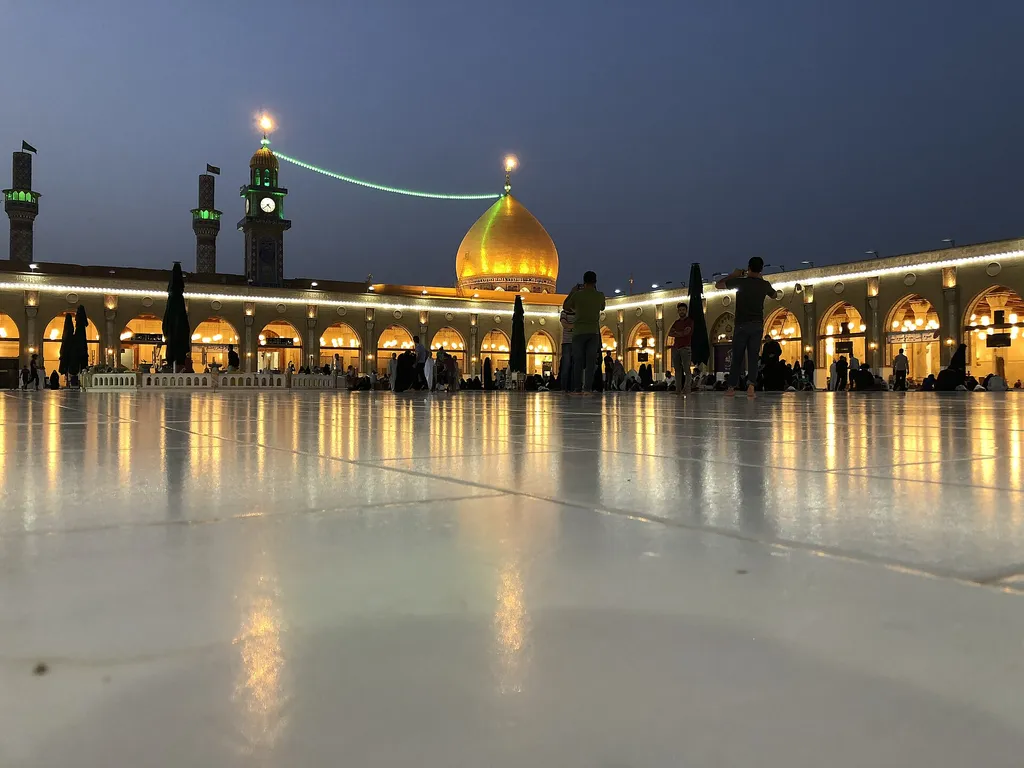
Najaf City — Iraq's Sacred Heart and Spiritual Capital
Location & Overview
Najaf sits on the western plateau of central Iraq, approximately 160 kilometres south of Baghdad, near the banks of the great Euphrates River. Serving as the capital of An-Najaf Governorate with a population of over 700,000, the city blends the ancient and the living in a way few places on Earth can match. Its desert climate — hot and dry in summer, mild and welcoming in winter — makes the cooler months the ideal season for exploration. But in truth, Najaf has a way of drawing visitors regardless of the calendar, for its pull is something far deeper than weather or logistics.
Tradition holds that the Abbasid Caliph Harun al-Rashid founded Najaf around 791 CE, though the city's true significance crystallised after the discovery of the burial site of Imam Ali ibn Abi Talib, cousin and son-in-law of the Prophet Muhammad, who was martyred in 661 CE. Ever since, Najaf has stood as the third holiest city in Islam — surpassed only by Mecca and Medina — drawing an estimated three million pilgrims annually from across the Muslim world and beyond.
The Imam Ali Shrine — Crown Jewel of Najaf
Rising above the city's ancient skyline like a second sun, the Imam Ali Shrine is among the most breathtaking works of Islamic architecture on the planet. Its gleaming golden dome and soaring minarets are visible for kilometres, drawing pilgrims and travellers into the sacred heart of the city. The exterior is adorned with intricate mirror mosaics, hand-painted tilework, and Quranic calligraphy rendered in gold, while the interior houses a silver tomb surrounded by silver-barred windows and doors fastened with an enormous silver lock — a marvel of devotional craftsmanship.
Travellers who have visited consistently describe the experience as profoundly moving regardless of their own faith. The atmosphere inside — filled with murmured prayers, the scent of rose water, and the quiet weeping of the devout — creates an emotional landscape unlike anywhere else in Iraq. Non-Muslim visitors are welcomed in designated areas where they can witness the majesty of the setting and feel the palpable weight of centuries of unbroken devotion.
Wadi al-Salam — The Valley of Peace
Stretching out from the shadow of the shrine, Wadi al-Salam is the world's largest cemetery, spanning over 1,485 acres and holding the remains of more than eight million souls. Among those at rest here are the Islamic prophets Hud and Salih, mentioned in the Quran, alongside generations of Shia scholars, statesmen, and the devout faithful from dozens of countries. Many Shia Muslims across the world aspire to be buried in this sacred ground, believing they will rise on the Day of Judgement beside Imam Ali himself.
Walking through Wadi al-Salam is a journey through time and memory. Tombs of all shapes and eras stretch toward every horizon — elaborate domed mausoleums from the Ottoman period standing beside modest modern headstones. Viewed from above, the cemetery resembles a vast city unto itself, a testament to the deep human longing for closeness to the sacred even in death. It is extraordinary, and unmissable.
The Najaf Seminary — A Living Tradition of Knowledge
Najaf is not only a spiritual destination — it is an intellectual one. The city's renowned religious seminary, the Hawza, is one of the most important centres of Islamic scholarship in the world and has been for over a thousand years. It was here that Ayatollah Khomeini lectured and taught for nearly fifteen years between 1964 and 1978, and here that many of the leading figures of the modern Islamic world were educated. The scholars who studied in Najaf's mosques and libraries have shaped religious thought across Iraq, Iran, Lebanon, and beyond.
Throughout the city's historic neighbourhoods, visitors will find ancient libraries housing rare Islamic manuscripts, traditional religious schools still in active use, and institutions that have preserved a continuity of learning stretching back to the early Islamic era. For travellers with an interest in Islamic intellectual history, wandering through this living archive of knowledge is one of Najaf's most quietly rewarding experiences.
Landmarks Beyond the Shrine
Najaf rewards the curious traveller with a rich selection of secondary sites that deepen the story of the city. Khan al-Shilan, an Ottoman-era pilgrim hostel now converted into a heritage museum, offers a compelling window into the city's role in the 1920 Iraqi Revolt against British rule — its exhibits covering weaponry, documents, and artefacts from this pivotal chapter of modern Iraqi history. Close by, the Great Mosque of Kufa — located some ten kilometres from Najaf's centre — stands as one of the oldest mosques in the Islamic world, intimately connected to the life of Imam Ali and the very birth of Islamic civilisation.
Nature lovers and those seeking a gentler pace will find solace in the Najaf Orchards, an expanse of date palms and fruit groves that ring the city's depression and serve as its traditional green lungs. Walking through these shaded agricultural lands offers rare glimpses of ancient Mesopotamian farming practices and a peaceful contrast to the intensity of the pilgrimage sites.
Souks, Food & Hospitality
The markets surrounding the Imam Ali Shrine are an experience unto themselves — narrow lanes fragrant with incense and spices, stacked with hand-carved prayer beads, brass lanterns, calligraphy art, and religious artefacts crafted by families whose workshops have occupied the same spots for generations. Bargaining is expected and warmly conducted, and the conversations you have along the way are often the richest souvenirs you will take home.
Najaf's culinary scene reflects its role as a crossroads of pilgrimage from South Asia, Iran, and the Arab world. Restaurants near the shrine serve everything from traditional Iraqi masgouf — whole fish grilled over open flame beside the river — to fragrant biryanis, succulent kebabs, and sweet-filled pastries. Perhaps most memorable is the generosity of the volunteer vendors along the pilgrimage routes who distribute free food and drink to all who pass — a display of communal hospitality that encapsulates the soul of Najaf.
Planning Your Visit
Autumn and winter offer the most comfortable temperatures for exploring Najaf's outdoor sites and walking the pilgrimage routes. Najaf International Airport connects the city to Baghdad, Tehran, and Dubai, while overland travel from Baghdad by road takes roughly two and a half hours. The city is deeply conservative, and visitors are encouraged to dress modestly and seek permission before photographing people or religious activities. Najaf is widely considered one of Iraq's safer cities, with extensive security infrastructure protecting its pilgrimage sites. Whether you arrive as a pilgrim, a student of history, or simply a traveller hungry for experiences that transcend the ordinary — Najaf will leave its mark on you for a lifetime.
Imam Ali Shrine
The Imam Ali Shrine is one of the most architecturally magnificent and spiritually significant sites in the Islamic world. Its brilliant golden dome, mirror-mosaic walls, and silver-adorned inner sanctum draw millions of pilgrims annually from dozens of countries. Even travellers unfamiliar with Shia Islam find themselves profoundly moved by the beauty and devotion that saturate every corner of this extraordinary place.
Wadi al-Salam Cemetery
Stretching over 1,485 acres on the outskirts of the shrine, Wadi al-Salam is the largest cemetery in the world and home to more than eight million souls, including Quranic prophets and renowned Islamic scholars. The sweeping panorama of tombs and mausoleums extending to the horizon is one of the most strikingly surreal and moving landscapes in all of Iraq.
The Najaf Hawza
For over a thousand years, the Najaf Seminary has been one of the most influential centres of Islamic scholarship on earth, shaping religious thought across the Muslim world. The city's ancient libraries, manuscript collections, and active religious schools allow visitors to step inside a living intellectual tradition that continues to shape global Islamic discourse to this day.
Najaf's Historic Souks
The labyrinthine markets surrounding the shrine overflow with handcrafted prayer beads, brass lanterns, calligraphy art, and religious artefacts made by families whose workshops have stood in the same lanes for generations. The blend of incense-scented air, warm vendor hospitality, and centuries-old craft traditions makes the Najaf souk one of Iraq's most immersive cultural experiences.
Great Mosque of Kufa
Just ten kilometres from Najaf's centre, the Great Mosque of Kufa is among the oldest mosques in the Islamic world and deeply intertwined with the life and legacy of Imam Ali. As one of the earliest centres of Islamic civilisation, it offers visitors a profound encounter with the earliest chapters of Islamic history, still vivid within its ancient walls.