

Culinary Tourism
What Is Culinary Tourism?
Culinary tourism is the art of exploring a country through its food — discovering its history, culture, and people one dish at a time. It goes far beyond eating: it's about understanding the stories behind every recipe, the hands that prepared it, and the civilisations that shaped it. In Iraq, this journey takes on a truly extraordinary depth, spanning millennia of culinary creativity that few destinations on earth can match.
A Kitchen Born from Civilisation
Iraqi cuisine is among the world's oldest living culinary traditions. Archaeologists have uncovered clay tablets in Mesopotamia bearing the world's earliest recorded recipes, dating back over four thousand years. The tradition reached its peak during the Abbasid Golden Age, when Baghdad was the intellectual and cultural capital of the world — a city where flavours from Andalusia to India converged at a single table.
Today, Iraqi food reflects a remarkable layering of Persian, Turkish, Arab, and Assyrian influences, while retaining a character entirely its own. Cardamom, cumin, saffron, and tamarind are its signature spices; dates, long-grain rice, and freshly baked flatbread are the pillars of every meal. Iraqi hospitality is inseparable from its food — a guest is never left wanting.
Must-Try Dishes on Your Journey
No culinary tour of Iraq is complete without masgouf, the national dish: a whole carp butterflied, marinated in olive oil, tamarind, and turmeric, then slow-grilled upright beside an open flame on the banks of the Tigris River. Equally unmissable is quzi — a whole lamb stuffed with fragrant spiced rice, nuts, and vegetables, slow-roasted for hours until meltingly tender. For street food lovers, kubba mosul (crispy bulgur dumplings filled with spiced meat), freshly baked samoon bread, and charcoal-grilled kebabs are waiting around every corner.
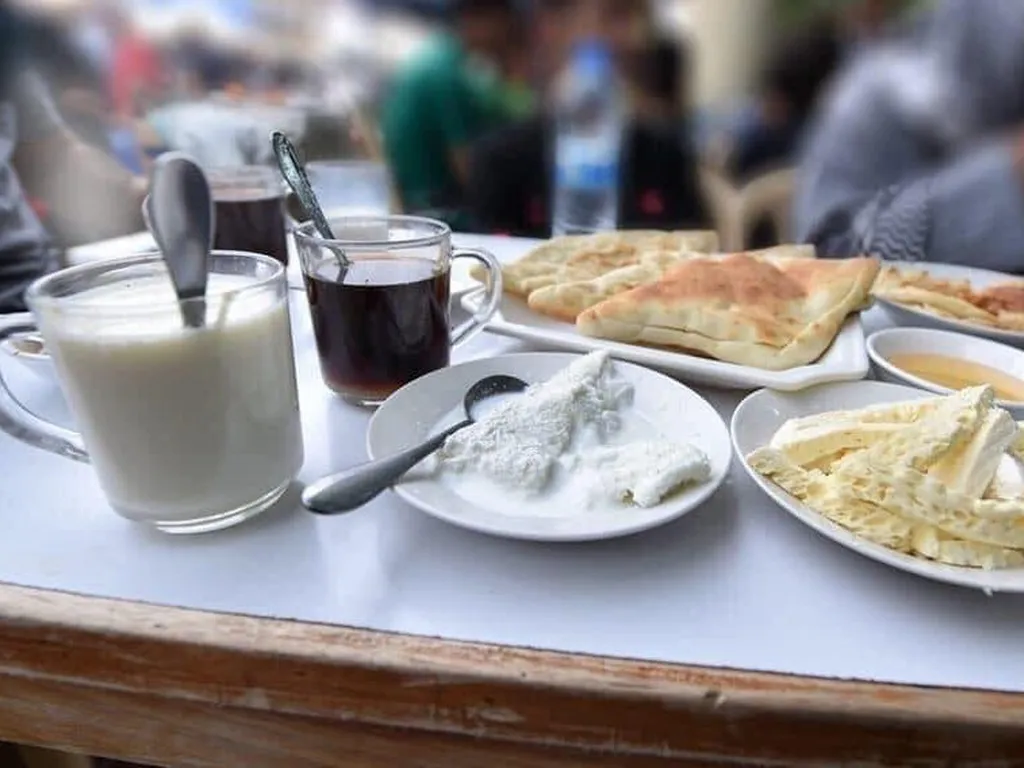
For those with a sweet tooth, kleicha — Iraq's beloved national cookie, filled with dates or walnuts and laced with cardamom — is found in bakeries and family kitchens alike. And a traditional Iraqi breakfast of kahi (flaky pastry) with geymar (clotted cream from buffalo milk) and honey is a morning ritual well worth waking up early for.
Regional Flavours Across Iraq
One of the great pleasures of culinary tourism in Iraq is how dramatically the food changes from city to city. Baghdad's Abu Nawas waterfront is famous for its masgouf restaurants overlooking the Tigris, while the capital's streets buzz with kubba carts and shawarma stands. In Erbil, Iskan Street transforms at night into a vibrant open-air food festival of Kurdish kebabs, shalgam, and baklava. In the south, Basra and Nasiriyah bring bolder, sea-influenced flavours, and a visit to the Mesopotamian Marshlands offers the unforgettable experience of eating fresh masgouf in a traditional mudhif reed house on the water.
Begin Your Culinary Adventure
Food in Iraq is more than sustenance — it is hospitality made tangible. Every meal is an invitation: to sit, to linger, to share. Whether you are exploring the spice markets of Baghdad, sampling street food in Mosul, or joining a family table in Erbil, Iraqi cuisine will leave a lasting mark on your palate and your memory. Let Ard Al-Hani guide you through this rich, layered, and deeply human gastronomic journey.