

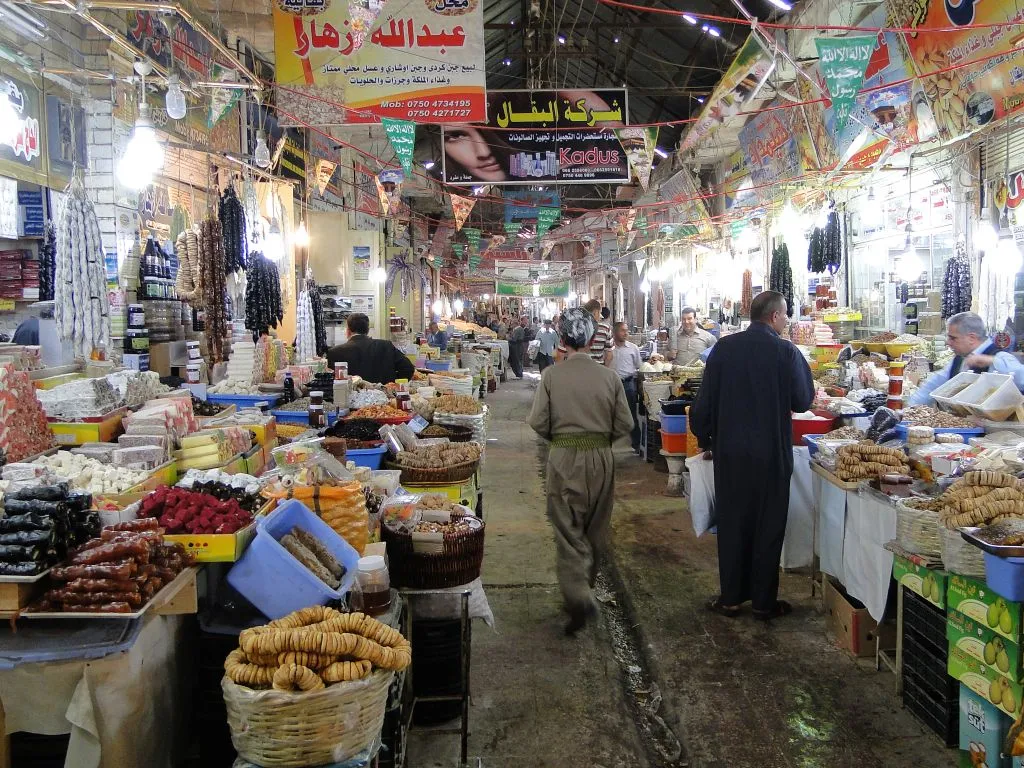
Grand Bazaars
Markets That Have Pulsed for Millennia
Iraq's grand bazaars are not merely places to shop — they are living chapters of history, where civilizations overlap and every alleyway holds a story. Since the days of the Abbasid Caliphate, when Baghdad stood as the commercial heart of the world, these markets have served as gathering points for merchants, pilgrims, craftsmen, and curious travelers from every corner of the globe. Beneath their vaulted rooftops and along their labyrinthine lanes, the mingling scents of cardamom, fresh bread, aged copper, and handwoven wool tell a story no museum could fully capture.
Rooted in the trading legacy of ancient Sumer, Babylon, and Assyria, Iraq's bazaar culture runs deeper than commerce. It is a social institution — a place where strangers become guests over a glass of chai, and where the act of bargaining is less about price and more about connection.
Iraq's Most Iconic Grand Bazaars
Qaysari Bazaar in Erbil is widely considered one of the oldest covered markets in the world. Built in 1195 CE by Sultan Muzaffaraddin Gokbori as an extension of the millennia-old Erbil Citadel — a UNESCO World Heritage Site — the bazaar is a maze of specialized alleys where gold jewelry gleams in one lane, while another overflows with Kurdish white cheese, mountain honey, and freshly baked sweets. Visit the legendary Mam Khalil teahouse, its walls layered with black-and-white photographs, and linger over a glass of tea as the market hums around you.
In Baghdad, the historic Souk al-Safafeer (Market of the Coppersmiths) has echoed with the sound of hammers since the Abbasid era, where artisans have shaped copper into intricate bowls, vases, and calligraphy-engraved platters for centuries. Nearby, Souq Al-Saray — tucked behind the iconic Al-Mutanabbi Street — draws book lovers and collectors to its stalls of rare manuscripts, antiques, and traditional Iraqi crafts. Further south, the Grand Bazaar of Najaf unfolds in the shadow of the Imam Ali Shrine, with some 200 shops offering textiles, religious artifacts, incense, and the warm pull of pilgrimage-city life.
What to Discover: Crafts, Flavors & Culture
Iraq's bazaars are a feast for every sense. Shoppers can find hand-knotted Persian and Kurdish carpets, finely hammered copperware engraved with Arabic calligraphy, handmade gold jewelry, traditional Kurdish kalash shoes, and a rich array of spices including saffron, dried limes, and sumac. Street food vendors offer grilled kebabs, crispy-bottomed biryani, and slow-cooked stews that have sustained market-goers for generations. In the covered alleys, you may stumble upon antique coins, vintage photographs, or a craftsman still plying his inherited trade with nothing but simple tools and decades of mastery.
Who Should Visit?
Grand bazaar tourism in Iraq appeals to a wide range of travelers: cultural explorers eager to go beyond the surface, photography enthusiasts captivated by color and texture, collectors hunting for authentic handmade pieces, and pilgrims who naturally pass through the great markets of Najaf and Karbala. Whether you are drawn by history, flavors, crafts, or simply the electric energy of a living marketplace, Iraq's grand bazaars will leave a lasting impression.
Planning Your Bazaar Experience
The best seasons to visit are spring (March–May) and autumn (September–November), when temperatures are pleasant and the markets are lively. Bazaars are especially vibrant during Newroz (Kurdish New Year), Eid al-Adha, and Ramadan. Bring Iraqi Dinar, as most vendors prefer local currency. Bargaining is not just expected — it is welcomed. Allow yourself to wander without a fixed plan, because in Iraq's grand bazaars, the best discoveries are never on the map.