

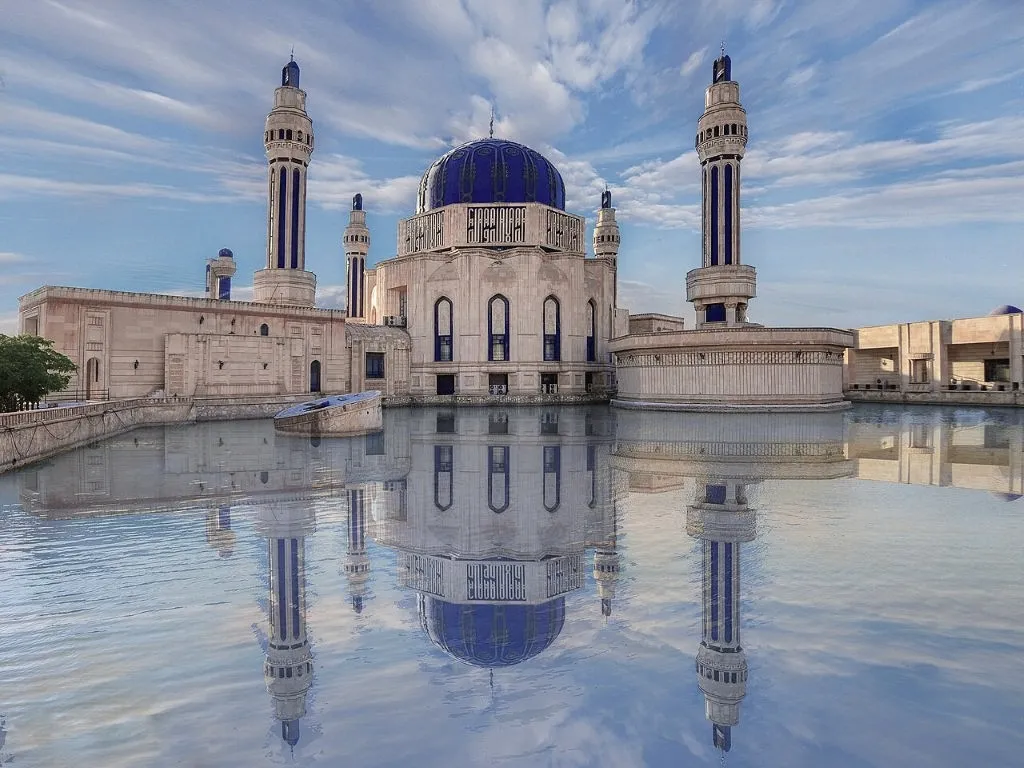
Mosques
Where Islamic History Was Born
Few countries on earth carry the weight of Islamic history the way Iraq does. Between the Tigris and Euphrates — the rivers that once cradled the world's earliest civilizations — rose some of the most spiritually significant mosques ever built. Visiting Iraq's mosques is not simply a religious act; it is a journey into the very foundations of Islamic faith, scholarship, and art.
Every year, millions of pilgrims and cultural travelers make their way to Iraq, drawn by a spiritual magnetism that has endured for over fourteen centuries. Whether you come seeking devotion, history, or architectural wonder, Iraq's mosques will leave a lasting imprint on your soul.
Iconic Mosques Across Iraq
The Great Mosque of Kufa, built in 639 CE, stands as one of the earliest mosques in the Islamic world. Deeply connected to Imam Ali ibn Abi Talib — who prayed within its walls — it remains a place of immense spiritual and historical significance for Muslims of all backgrounds. In Baghdad, the twin golden domes of the Al-Kadhimiya Shrine shimmer above the city, housing the tombs of Imam Musa al-Kadhim and Imam Muhammad al-Jawad and welcoming countless visitors year-round.
In Samarra, the iconic spiral Malwiya Minaret of the Great Mosque rises 52 metres into the sky — a UNESCO World Heritage-listed masterpiece of 9th-century Islamic architecture unlike anything else in the world. Meanwhile, the Shrine of Imam Hussein in Karbala, with its breathtaking golden dome, is one of the holiest sites outside Mecca and Medina, drawing tens of millions during the Arbaeen pilgrimage. In Najaf, the radiant Shrine of Imam Ali — fourth holiest city for Shia Muslims — offers a sanctuary of peace and profound reflection.
A Journey for All Believers
What makes mosque tourism in Iraq especially remarkable is its breadth. Sunni Muslims find deep reverence at the Abu Hanifa Mosque in Baghdad — the resting place of the great Islamic jurist — and at the mausoleum of Sheikh Abdul-Qadir Gilani, a beloved figure for Sufi followers worldwide. Shia Muslims are drawn to the great shrines of Karbala, Najaf, Kadhimiya, and Samarra. This spiritual diversity makes Iraq a uniquely welcoming destination for the entire Muslim world.
The Art and Soul of Islamic Architecture
Iraq's mosques are also a living gallery of Islamic architectural evolution. From the austere, early arches of Kufa to the luminous golden domes of Karbala and Najaf, and the striking turquoise tilework and intricate calligraphy of Samarra — each mosque tells a different chapter of a shared artistic story. Here, beauty and belief have always been one and the same.
Planning Your Visit
Spring and autumn offer the most comfortable conditions for visiting Iraq's mosques. Most major shrines are open around the clock or for extended hours. Modest dress is required at all sites. The major mosque cities — Baghdad, Karbala, Najaf, Samarra, and Kufa — are well connected by road. Iraqi hospitality is legendary, and you'll find warmth and generosity at every stop along the way.