

Statues & Monuments
A Land Carved in Stone and Bronze
Iraq is not simply a country — it is one of humanity's oldest canvases. In this cradle of civilization, the first cities rose, the first writing appeared, and some of the most ambitious monuments ever conceived were built. The legacy of those efforts is still standing today: across southern plains, riverbanks, and city squares, statues and monuments invite visitors to walk through thousands of years of history in a single journey.
Exploring Iraq's statues and monuments is a uniquely layered experience. Ancient ziggurats stand alongside modernist bronze sculptures; Mesopotamian reliefs share the horizon with Sassanid arches. Each piece — whether a few centuries old or a few millennia — carries the fingerprints of a people who believed deeply in the power of art to preserve memory and inspire pride.
Baghdad's Open-Air Gallery
The capital holds an extraordinary collection of public monuments that trace Iraq's modern identity. At the heart of Tahrir Square stands the Freedom Monument (Nasb al-Hurriyah), completed in 1961 by master sculptor Jawad Saleem. Stretching 50 metres across, its 14 bronze panels and 25 figures narrate Iraq's revolutionary history in a style that blends Babylonian and Assyrian relief art with bold modernism — a work that must be read right to left, like a verse of Arabic poetry.
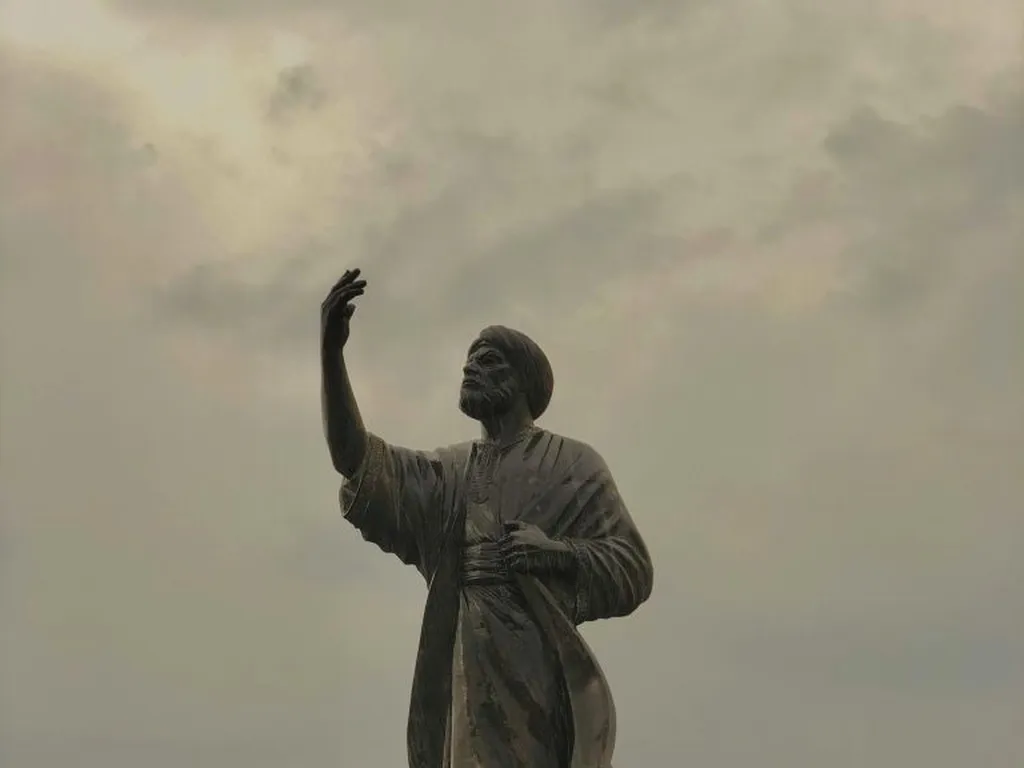
Nearby, the Martyr's Monument by Ismail Fattah Al-Turk rises with its iconic split turquoise dome, a soaring tribute to those lost in war. On Saadoun Street, the beloved Kahramana Fountain — sculpted by Mohammed Ghani Hikmat in 1971 — depicts the fearless heroine of the One Thousand and One Nights. Along the banks of the Tigris, the statues of Queen Scheherazade and King Shahryar evoke the magic of Iraq's great storytelling tradition. Together, these works form one of the most remarkable collections of public sculpture in the Arab world.
Ancient Monuments: Millennia Set in Stone
Beyond Baghdad, Iraq's ancient monuments stun with their scale and age. The Ziggurat of Ur in Dhi Qar, built around 2100 BCE, is one of the world's best-preserved monuments from early civilization — a massive stepped pyramid dedicated to the moon god Nanna that still dominates the southern landscape. Near Baghdad, the Arch of Ctesiphon (Taq Kasra) soars 29 metres into the sky; as the largest single-span brick arch ever built without reinforcement, it is a breathtaking feat of Sassanid engineering. The UNESCO-listed ruins of Hatra once harboured statues of gods, princes, and priests whose fragments now grace the Iraq Museum — a reminder of how richly adorned this ancient caravan city once was.
Who Should Visit — and How to Plan
This type of tourism is ideal for history lovers, art enthusiasts, cultural travellers, and anyone who wants to witness how human beings have memorialized their greatest moments in lasting form. Spring and autumn offer the most comfortable conditions for outdoor exploration in Baghdad and the south. Sites like Ur and the Arch of Ctesiphon deserve a full day each, while Baghdad's monuments can be toured over one or two leisurely days. Hiring a knowledgeable local guide is highly recommended — the stories behind each work deepen the experience immeasurably. In Iraq, every monument is a conversation between the past and the present, and you are warmly invited to listen.