

Babylon: The Cradle of Civilization
Gateway to the Ancient World
Rising from the fertile plains of Mesopotamia, Babylon stands as one of humanity's most extraordinary gifts to history. Located in Babil Governorate, roughly 85 kilometres south of Baghdad along the banks of the Euphrates River, this magnificent site was once the greatest city on earth — a sprawling metropolis of temples, palaces, and grand ceremonial avenues that left ancient visitors breathless. Kings, philosophers, and historians from across the known world traveled to Babylon in awe, and today its storied ruins invite modern travellers to walk where conquerors once trod and to feel the full weight of millennia beneath their feet.
Inscribed as a UNESCO World Heritage Site in 2019 after decades of international advocacy stretching back to 1983, the ancient city spans a vast 10-square-kilometre complex of which barely 18 percent has been excavated. Babylon is not merely an archaeological site — it is the living memory of a civilization that gave the world its first written laws, its earliest astronomical records, and some of the most enduring myths in all of human history.
A History Written in Clay and Stone
Babylon's history stretches back more than 4,000 years, but it reached its most dazzling heights under the Neo-Babylonian Empire between 626 and 539 BCE. Under rulers such as the legendary King Hammurabi — author of one of the world's earliest legal codes — and the great Nebuchadnezzar II, Babylon became the undisputed capital of the ancient world. At its peak, the city was estimated to house over 100,000 inhabitants, making it the first true megalopolis in recorded history.
Nebuchadnezzar II transformed Babylon into an architectural wonder without rival, constructing grand palaces, fortifying the city with massive double walls, and erecting the iconic Ishtar Gate — a breathtaking portal faced with brilliant blue glazed tiles depicting dragons and sacred bulls of the gods Marduk and Adad. The Tower of Babel, immortalized in the sacred texts of Judaism, Christianity, and Islam, is believed to have been inspired by the great ziggurat Etemenanki that once soared above Babylon's skyline, a monument to mortal ambition reaching toward the heavens.
Legendary Monuments to Discover
Visitors to Babylon today encounter a landscape layered with time and wonder. The reconstructed Ishtar Gate — the original was dismantled by German archaeologists in the early 20th century and now graces Berlin's Pergamon Museum — still commands awe with its vivid imagery of mythological creatures and its unmistakable lapis blue hue. Walking through it, you step onto the Processional Way, the ancient ceremonial boulevard once lined with lion-adorned walls during Babylon's grand New Year festivals, where some of the original paving stones still lie underfoot.
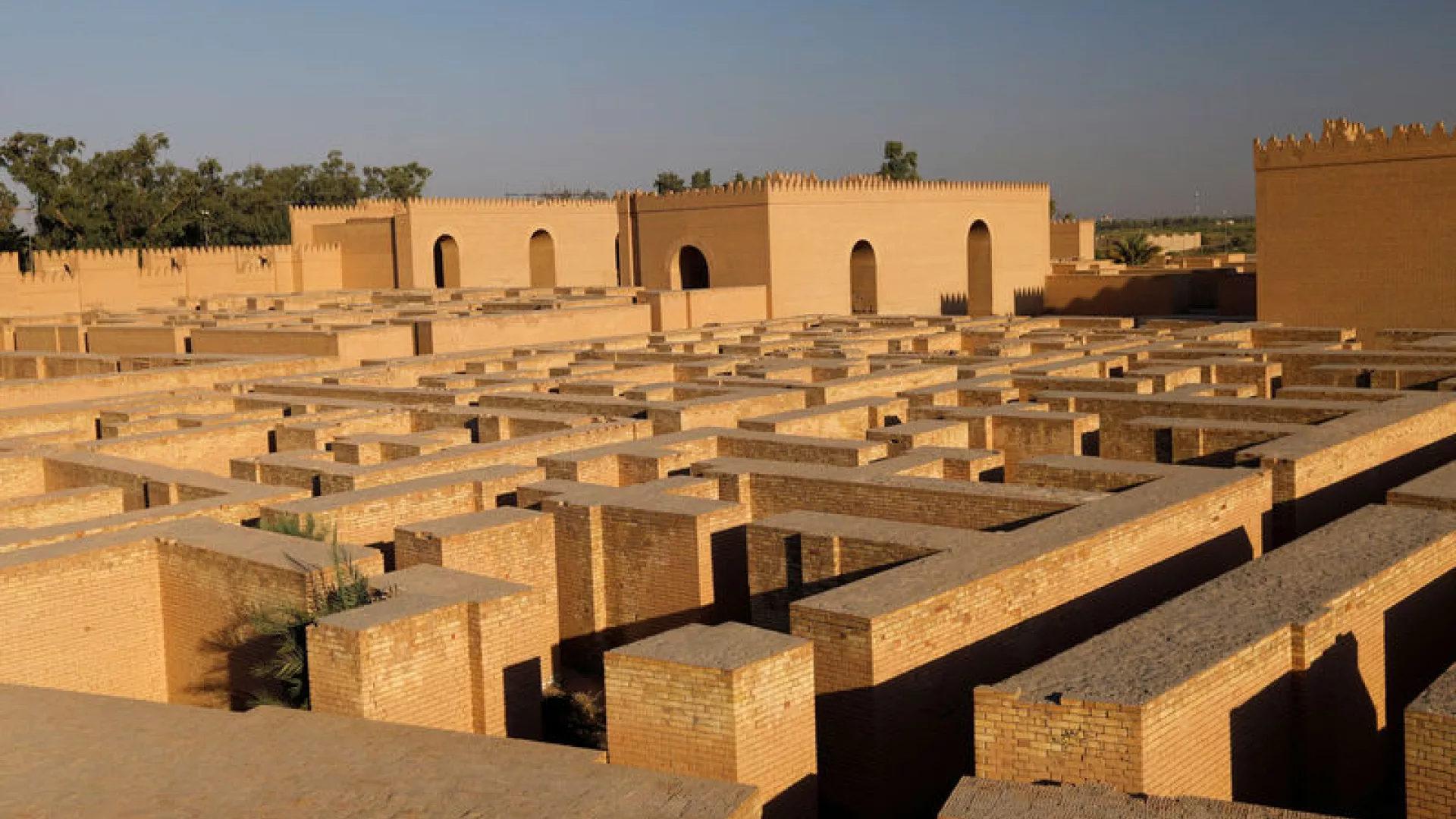
The Royal Palace of Nebuchadnezzar II reveals the ambition of Babylon's greatest ruler through its vast network of halls and open courtyards. Nearby, the iconic Lion of Babylon, a striking black basalt sculpture over 2,600 years old, stands as one of Iraq's most powerful national symbols, gazing outward with a timeless authority. And though the Hanging Gardens — celebrated as one of the Seven Wonders of the Ancient World — remain the subject of tantalizing scholarly debate, their legendary spirit infuses every corner of this extraordinary site.
A Symbol Across Cultures and Centuries
Few cities in human history have captured the imagination quite like Babylon. Referenced in the sacred texts of Judaism, Christianity, and Islam, and described with wonder by Greek historians including Herodotus, Babylon has served as a universal symbol of grandeur, mystery, and human ambition for more than two millennia. The stories of the Tower of Babel and the Hanging Gardens have inspired art, literature, and architecture across every culture that inherited the ancient world's extraordinary legacy.
This profound symbolic weight earned Babylon its UNESCO inscription under Criterion VI — the recognition that a place has exerted outstanding universal influence on human thought and culture across the centuries. To visit Babylon is not simply to tour an archaeological site; it is to stand at the very source of civilization's most enduring stories, and to understand where so much of what we know as culture and history truly began.
Planning Your Visit
The best time to visit Babylon is between October and March, when Iraq's desert climate is mild and pleasant for outdoor exploration across the wide grounds. The site is located near the modern city of Hillah and is easily reached by road from Baghdad in approximately 90 minutes. Guided tours are available at the site, with English-speaking guides on hand to bring the ruins to vivid life with expert commentary drawn from years of experience. A small museum at the entrance offers helpful context through replica artifacts, maps, and displays covering the site's multi-layered history. An early morning arrival is warmly recommended to explore the vast grounds in peace before the midday heat sets in.
As Iraq's tourism infrastructure continues to flourish following years of reconstruction, Babylon stands ready to reclaim its rightful place as one of the world's supreme heritage destinations. Come with curiosity, leave with wonder — and a profound feeling that you have touched the very foundations upon which human civilization was built.
The Ishtar Gate
One of antiquity's most breathtaking monuments, the reconstructed Ishtar Gate dazzles with its brilliant lapis-blue glazed tiles adorned with dragons and sacred bulls. For centuries it marked the ceremonial entrance to the greatest city on earth, and it remains Babylon's most unforgettable sight.
The Hanging Gardens
Described by ancient writers as terraced gardens soaring skyward above the Euphrates, the Hanging Gardens of Babylon were celebrated as one of the Seven Wonders of the Ancient World. Their exact location remains a captivating mystery, adding an air of enchantment to every visit.
The Lion of Babylon
This magnificent black basalt sculpture, over 2,600 years old, is one of Iraq's most iconic national emblems. Carved during the reign of Nebuchadnezzar II and believed to have originated in northern Syria, the Lion of Babylon gazes across the ruins with an authority that has never faded.
The Processional Way
Stretching from the Ishtar Gate through the heart of the ancient city, this grand ceremonial avenue was once lined with lion-adorned walls and filled with the sounds of New Year festival processions. Some of the original paving stones still bear the marks of those ancient celebrations.
Nebuchadnezzar's Palace
The vast Royal Palace of Nebuchadnezzar II stands as a testament to the ambition of Babylon's greatest ruler, its sprawling halls and courtyards evoking the scale of an empire that once dominated the ancient world. Walking through its remains is a journey into the heart of Babylon's golden age.