

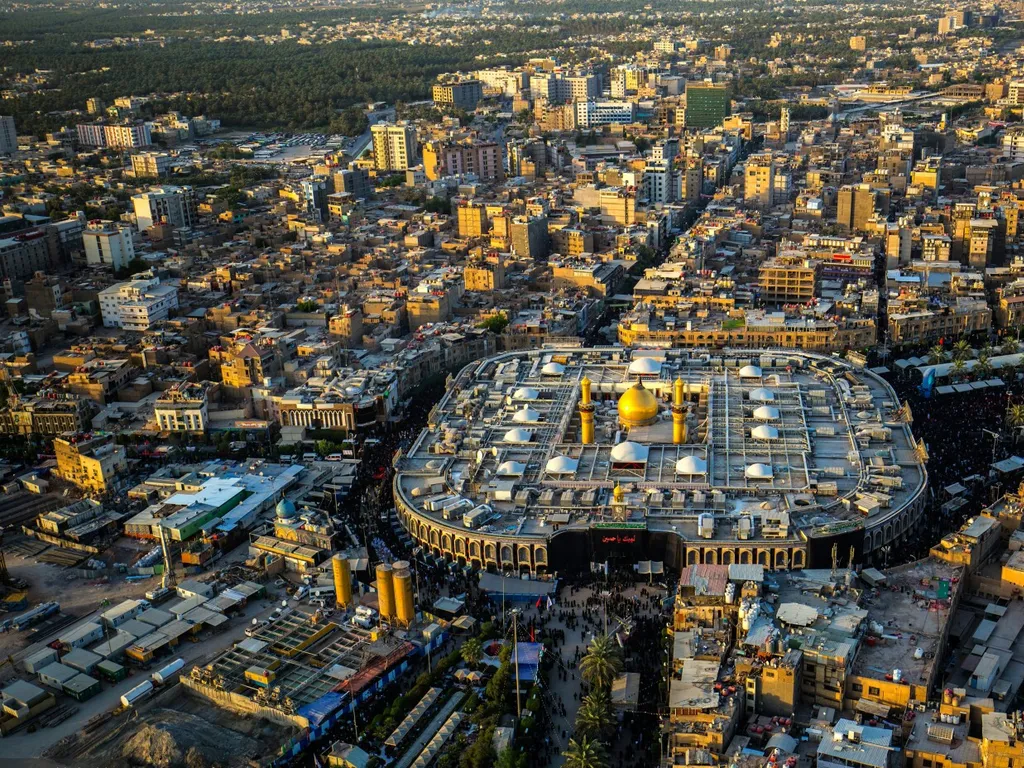
Karbala: Iraq's Sacred City of Faith and History
Location and Overview
Rising from the heart of central Iraq, about 120 kilometers southwest of Baghdad, Karbala is the capital of Karbala Governorate and one of the most spiritually charged cities on earth. Home to around 800,000 people, it is the second-largest city in central Iraq, cradled between the shimmering expanse of Lake Milh (Razzaza Lake) to the west and the ancient channels of the Euphrates to the east. The very name of the city traces back to the ancient Babylonian cluster of villages known as "Karb Babel," hinting at a human story that stretches back well before Islam — back to the dawn of civilization itself.
Yet it is the events of the 7th century that gave Karbala its eternal identity. Today, its golden domes catch the sunlight like beacons of devotion, and its streets hum with the prayers of pilgrims arriving from over 56 countries. For those who walk its sacred paths, Karbala is not merely a destination — it is an encounter with the deepest currents of human faith, sacrifice, and remembrance.
The Battle of Karbala — A Turning Point in History
On the 10th of Muharram, 61 AH — October 10, 680 CE — the plains of Karbala became the stage for one of the most consequential battles in Islamic history. Imam Husayn ibn Ali, the beloved grandson of the Prophet Muhammad, stood with a small band of devoted followers — including women and children — against a massive Umayyad army commanded by generals loyal to the Caliph Yazid. Husayn refused to pledge allegiance to a rule he believed unjust, choosing instead to honor conscience over convenience.
He and his companions were martyred on that day, and in dying they planted the seeds of a moral legacy that has endured for over fourteen centuries. The event, observed as Ashura, is commemorated by nearly 100 million Shia Muslims annually. The stretch between the two shrines — a 378-meter sacred corridor known as Bayn al-Haramayn — is believed to mark the very ground where the battle was fought. To walk it today is to feel history breathing beneath your feet.
The Sacred Shrines — Jewels of Devotion
The Imam Hussein Shrine stands at the center of Karbala, its magnificent golden dome and soaring minarets tiled in turquoise visible from across the city. The shrine complex holds the tomb of Imam Husayn and draws tens of millions of visitors every year, making it one of the most visited religious sites on the planet. Inside, the air is thick with whispered prayers, the fragrance of rose water, and the quiet weeping of pilgrims pressing their hands against the gilded tomb screen. Even the most secular visitor cannot step inside and remain unmoved.
A short walk away stands the Al Abbas Holy Shrine, the resting place of Husayn's half-brother Abbas ibn Ali, who carried the standard of his brother's cause until he too was martyred. Its golden dome gleams with a different but equally profound radiance — a tribute to loyalty, courage, and sacrifice. Together, the two shrines form an axis of faith that anchors the city and gives Karbala its unmistakable spiritual gravity.
Arbaeen — The World's Largest Peaceful Gathering
Forty days after Ashura, Karbala transforms into the site of an extraordinary human phenomenon. The Arbaeen pilgrimage draws tens of millions of visitors — in 2023, official counts surpassed 22 million over a single ten-day period, making it the largest peaceful gathering ever recorded in human history. Pilgrims arrive from all corners of Iraq and from over 56 nations, many of them walking enormous distances on foot across the Iraqi plains to reach the city.
What makes Arbaeen remarkable is not just its scale, but its spirit. Volunteer stations line the roads offering free food, water, and medical care to passing pilgrims. Strangers become family on the road. The pilgrimage is a living testament to values of solidarity, generosity, and shared humanity that transcend borders, languages, and backgrounds. Witnessing it, even from the margins, is one of the most humbling experiences available to any traveler anywhere in the world.
Beyond the Shrines — Cultural and Historical Gems
Karbala offers far more than its sacred shrines. The Al-Ukhaidir Fortress, located about 65 kilometers southwest of the city in the open desert, is a breathtaking 8th-century Islamic palace complex with towering round towers, labyrinthine corridors, and grand reception halls that speak to the refined architectural ambition of the early Abbasid era. It is a UNESCO-worthy monument that remains surprisingly undervisited — a hidden gem waiting to be discovered.
Near the village of Ayn al-Tamr, the Al-Aqiser archaeological site is home to what is described as one of the oldest Eastern Christian churches ever found — a reminder that this land has sheltered many faiths across the centuries. Back in the city, the Memory of Islam Museum, situated along the Karbala-Baghdad road, brings the events of 680 CE vividly to life through detailed exhibits and historical reconstructions. The Old City quarter, with its labyrinthine traditional bazaars, is perfect for slow wandering: perfume merchants, handcrafted silver prayer beads, religious artifacts, and heaps of saffron and cardamom fill the senses at every turn.
Food, Hospitality, and the Karbala Experience
To visit Karbala is also to taste one of Iraq's most generous culinary traditions. Seek out a plate of tashreeb — tender lamb poured over tear-shaped flatbread soaked in a rich, fragrant broth — or try madfoon, a slow-cooked stew of eggplant, onion, tomato, and lamb that melts into something deeply comforting. The smoky aroma of grilled kebabs perfumes the evening air around the old markets, and sweet shops serve warm baklava and kunafa that could only have been made by hands that have been doing so for generations.
After the day's wandering, the shores of Lake Milh offer a peaceful retreat where the sky turns amber and rose at sunset, and the surface of the salt lake mirrors the departing light in silence. Karbala's hospitality is legendary — visitors from every background are welcomed as honored guests.
Visitor Tips — Planning Your Journey
The best time to visit Karbala is between October and April, when temperatures are mild and conducive to outdoor exploration. Summer months can be extremely hot and uncomfortable for extended walking. Najaf International Airport, about 80 kilometers to the south, offers regular international connections, and Karbala is well-linked to Baghdad and other Iraqi cities by road and rail. The city hosts over 900 hotels catering to all budgets, making accommodation accessible year-round — though prices rise significantly during Ashura and Arbaeen, when advance booking is essential.
Karbala is not simply a place to visit — it is a place to feel. Its streets carry centuries of prayer, its stones are soaked in the stories of saints and scholars, and its people extend a warmth that turns strangers into guests and guests into friends. Come to Karbala, and leave carrying something that no souvenir shop can offer: the memory of a city that has been reminding humanity, for over 1,400 years, what it means to stand for what is right.
Imam Hussein Shrine
The Imam Hussein Shrine rises over Karbala with a breathtaking golden dome and turquoise-tiled minarets that can be seen from across the city. It is the resting place of Husayn ibn Ali, grandson of the Prophet Muhammad, and one of the most visited religious sites on earth. Standing inside its inner halls, surrounded by prayer, incense, and the quiet emotion of millions of pilgrims, is an experience that leaves no visitor unchanged.
Al Abbas Holy Shrine
Just 378 meters from the Imam Hussein Shrine, the Al Abbas Holy Shrine honors Abbas ibn Ali — Husayn's half-brother and loyal standard-bearer at the Battle of Karbala. Its gleaming golden dome and intricately detailed architecture draw visitors into a space where devotion and artistry are inseparable. The corridor connecting the two shrines, known as Bayn al-Haramayn, is one of the most sacred walkways in the Islamic world.
Arbaeen Pilgrimage
Every year, Karbala hosts the Arbaeen pilgrimage — the largest peaceful human gathering ever recorded on earth. More than 40 million pilgrims from over 56 countries converge on the city forty days after Ashura, many of them walking for days across the Iraqi plains. The atmosphere of solidarity, generosity, and shared devotion makes this one of the most remarkable collective experiences a traveler can witness anywhere in the world.
Al-Ukhaidir Fortress
Rising dramatically from the Iraqi desert 65 kilometers southwest of Karbala, Al-Ukhaidir Fortress is an 8th-century Abbasid palace that rivals the grandest monuments of the ancient world. Its massive round towers, sweeping vaulted halls, and well-preserved stone facades make it a remarkable testament to early Islamic architecture. Surprisingly uncrowded, it offers a rare and intimate encounter with Iraq's extraordinary pre-modern heritage.
Battle of Karbala Site
The plains where the Battle of Karbala unfolded in 680 CE remain a profoundly moving place to visit. Bayn al-Haramayn — the 378-meter sacred corridor between the two shrines — marks the very ground where Husayn and his companions made their final stand. Walking this path, especially during Ashura or Arbaeen, connects visitors directly to one of history's most defining moral moments.
Old City Bazaars
Karbala's old city bazaars are a sensory celebration of Iraqi tradition. Narrow alleyways open into shops overflowing with handcrafted prayer beads, engraved silver items, religious manuscripts, incense blends, saffron, and ceremonial textiles. The merchants here are keepers of a craft culture passed down through generations, and the market's warm, unhurried pace invites visitors to slow down, linger, and connect with the authentic soul of the city.