

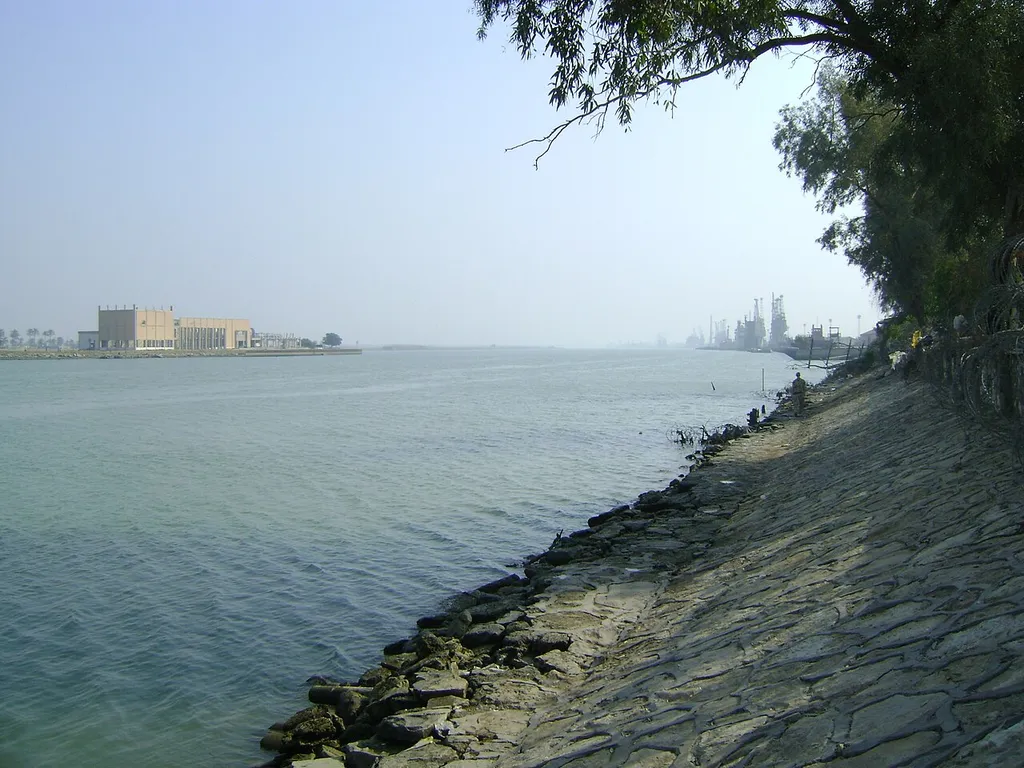
Shatt al-Arab
Where Two Rivers Become One
At the heart of southern Iraq, in the ancient town of Al-Qurnah, two of the world's most storied rivers draw together in a slow, majestic embrace. The Tigris and the Euphrates — the twin lifeblood of Mesopotamian civilization — merge to form the Shatt al-Arab, a grand waterway that flows 200 kilometres southeast before spilling into the Persian Gulf. This is not merely a river; it is a living monument to the dawn of human civilization, a place where mythology, history, and breathtaking natural beauty converge in a single shimmering ribbon of water.
The Shatt al-Arab stretches through Iraq's southernmost Basra Governorate, widening from a modest 232 metres near the city to nearly 800 metres at its mouth. Along its banks, groves of date palms sway in the warm Gulf breeze, fishing boats trace quiet arcs across the water, and the ancient port city of Basra hums with centuries of trade and culture. A journey to the Shatt al-Arab is, in every sense, a journey to the very origins of civilization itself.
A Waterway Through the Ages
The Shatt al-Arab has been a corridor of human history for millennia. Long before empires rose and fell on its banks, the people of ancient Mesopotamia depended on these waters for agriculture, transportation, and sustenance. The region around Al-Qurnah — where the rivers meet — has been associated since antiquity with the legendary Garden of Eden, making this confluence one of the most spiritually resonant spots on earth.
For centuries, control of the Shatt al-Arab was coveted by the great powers of the region. Ottoman sultans and Persian shahs fought for dominion over its waters; medieval Arab traders sailed its length to reach the markets of the Persian Gulf. During the Islamic Golden Age, Basra emerged as one of the Arab world's greatest intellectual and commercial capitals, and the Shatt al-Arab was its gateway to the world. Poets, scholars, and merchants from across the known world travelled these waters, leaving an indelible mark on the city's character and its enduring tradition of openness and learning.
A River That Shaped a City
No city is more intimately connected to the Shatt al-Arab than Basra. Often called the "Venice of the Middle East," Basra grew up around the waterway's branching canals and riverbanks, and its character remains inseparable from the river. The legendary Sinbad the Sailor is said to have set out from these very shores on his fabled voyages across the seas — and today, Sinbad Island sits in the middle of the Shatt al-Arab as a romantic testament to that enduring legend.
The Shatt al-Arab also gave Basra its role as Iraq's only gateway to the Persian Gulf, making it the country's most important port and a linchpin of its oil and trade economy. The river's banks once hosted the world's largest date palm forest — millions of trees stretching as far as the eye could see — and though greatly diminished by conflict and environmental pressures, the remaining groves still lend the riverscape an exotic, lush beauty that is unlike anything else in the Arab world.
What to See and Do
A visit to the Shatt al-Arab begins at the Basra Corniche, a beautifully renovated 3-kilometre promenade hugging the river's western bank. Here, families gather at sunset, street vendors offer grilled zubaidi fish and sweet Barhee dates, and café terraces lean out over the shimmering water. The Corniche is the beating heart of Basra's social life, and an evening stroll here offers an unparalleled window into the warmth and generosity of Iraqi hospitality.
For those who wish to experience the river from the water itself, boat tours depart from the Corniche pier, gliding past traditional fishing dhows, palm groves, and the storied façades of Ottoman-era buildings. Tours typically last 30 to 60 minutes and offer a perspective of the city that no road can match. Birdwatchers will delight in the river's wetland margins, which attract numerous migratory species. Nearby, the Basra Cultural Museum — housed in a refurbished lakeside palace — offers a rich introduction to the region's layered history, while the Al-Qurnah confluence site, 74 kilometres north, rewards travellers who wish to stand at the precise spot where the two great rivers meet.
Visitor Tips
The best time to visit the Shatt al-Arab is between October and April, when temperatures are mild and evenings along the Corniche are pleasantly cool. Summers are intensely hot, with temperatures regularly exceeding 45°C. Basra is served by Basra International Airport, with regular flights from Baghdad and several international destinations. Most sites along the Corniche are free to access; boat tours cost between $8 and $12 USD for a half-hour journey. Cash is preferred at markets and street vendors; ATMs are available in central Basra. Modest dress is recommended in public areas and markets. A local guide is advisable for excursions to the Al-Qurnah confluence and the date palm groves outside the city.
Tigris & Euphrates Confluence
At Al-Qurnah, the legendary Tigris and Euphrates rivers merge in one of the most extraordinary geographic encounters in human history. This awe-inspiring confluence has been linked since antiquity to the site of the Garden of Eden, making it a destination that unites natural splendour with profound spiritual resonance.
The Basra Corniche
Stretching three kilometres along the western bank of the Shatt al-Arab, the Basra Corniche is one of Iraq's most celebrated public spaces. At sunset, its promenades come alive with families, street food vendors, and waterfront cafés — an immersive introduction to the warmth of Basrawi daily life.
Ancient Date Palm Groves
The banks of the Shatt al-Arab once sheltered the largest date palm forest in the world. The remaining groves lend the river its lush, exotic character and continue to produce some of Iraq's finest dates, including the celebrated Barhee variety prized across the Arab world for its rich, honeyed sweetness.
Sinbad Island
Sitting in the middle of the Shatt al-Arab, Sinbad Island is a place where legend and landscape intertwine. Named for the mythical sailor said to have departed from Basra's shores, the island offers panoramic views of the river and serves as an evocative reminder of the city's storied role as a gateway to the world.
Traditional River Boat Tours
Boarding a traditional wooden boat on the Shatt al-Arab is an experience unlike any other. Tours glide past fishing dhows, date palm groves, and Ottoman-era buildings along the riverbank, offering a living tableau of the river's past and present that can be witnessed from no road or shore.