

Duhok — Gateway to Iraqi Kurdistan
Gateway to the Kurdish Mountains
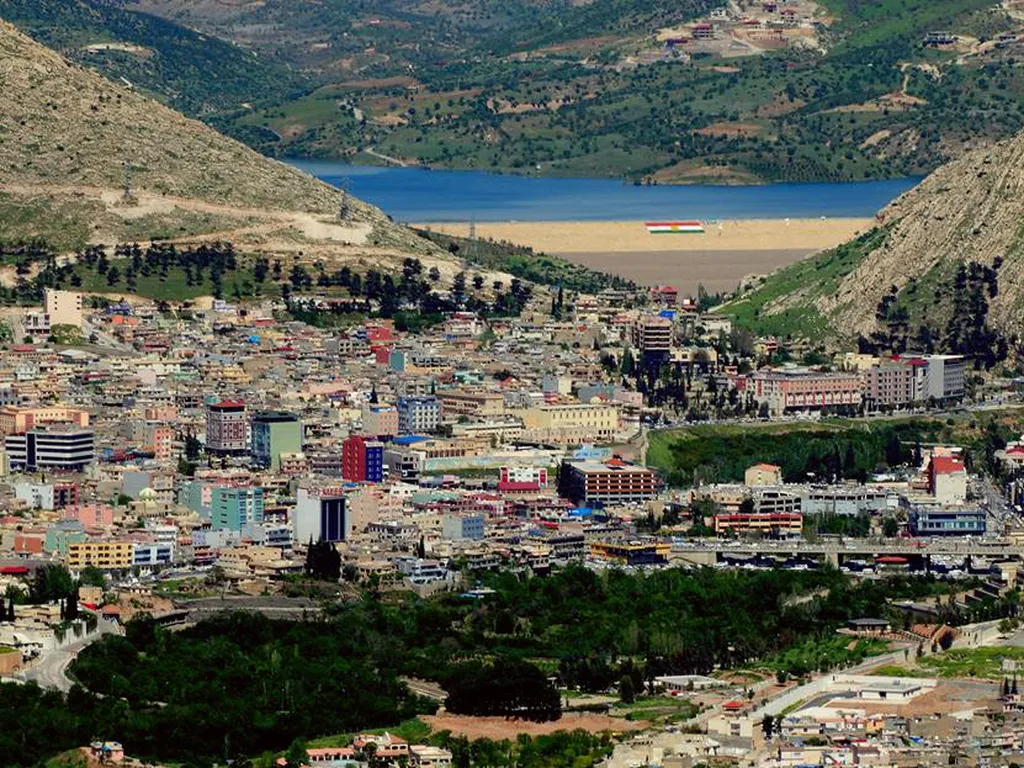
Cradled between the Bekhair and Zawa mountain ranges in the far northwest of Iraq, Duhok is one of the Kurdistan Region's most captivating cities. Set some 430 metres above sea level, the city unfolds across a sun-warmed valley where the peaks converge to form a dramatic natural amphitheatre unlike anything else in Iraq. With roots stretching back to the Stone Age and a modern skyline framed by ancient limestone ridges, Duhok invites visitors to step into a world where antiquity and vibrant Kurdish life coexist in vivid, unhurried harmony.
Home to a mosaic of Kurds, Yazidis, Assyrians, Chaldeans, and Armenians, the city's cultural fabric is as richly layered as the mountains that surround it. Duhok is not merely a gateway to Iraqi Kurdistan — it is a destination in its own right, offering sacred temples, Assyrian rock carvings, highland retreats, a bustling bazaar, and the kind of authentic hospitality that turns travellers into lifelong admirers.
A Living Chronicle — Ancient History
Duhok's roots extend deep into the ancient world. Historical records and archaeological remains date the city's heritage to between 705 and 681 BC, when the surrounding region was a contested frontier between the Assyrian state of Nineveh and rival powers including the Urartu, the Kutians, and the Mitanians. The name Duhok itself is thought to derive from the Kurdish words du (two) and hok (lump), recalling the ancient practice of levying a double grain tax on caravans passing through the valley — a testament to its enduring role as a vital trade corridor linking Iraq, Turkey, and Syria.
In 2020, archaeologists discovered an ancient tablet in the Balyuz hills dating to 165 BC, inscribed with a reference to the ruler Demetrius. The Halamata Cave preserves extraordinary Assyrian rock carvings known as the Maltai Reliefs, offering a rare window into the ceremonial traditions and canal systems of ancient Mesopotamia. These accumulated layers of civilisation — Assyrian, Babylonian, Abbasid, Ottoman, and Kurdish — make Duhok one of Iraq's most archaeologically resonant and historically layered cities.
Lalish: The Holiest Valley on Earth
No visit to Duhok is complete without a journey to Lalish, the most sacred temple of the Yazidi faith and one of the most spiritually remarkable sites in the entire Middle East. Located approximately 50 kilometres from the city centre in the Shekhan district, Lalish sits nestled among three mountains — Hizrat, Misat, and Arafat — at an elevation of about 861 metres. The temple complex, believed to be around 4,000 years old, is centred on the tomb of Sheikh Adi ibn Musafir, a revered 12th-century Sufi mystic who became the founding figure of the Yazidi faith.
For Yazidis worldwide, a six-day pilgrimage to Lalish is a sacred obligation undertaken at least once in a lifetime. Visitors walk barefoot through the valley as an act of reverence for the hallowed ground. The conical domed shrine, etched with ancient symbols — the sun, the moon, the sacred black serpent — radiates an atmosphere of stillness and devotion that transcends religious boundaries. Lalish is currently on Iraq's Tentative List for UNESCO World Heritage designation, a recognition long overdue for this extraordinary sanctuary of ancient faith and human resilience.
Natural Wonders: Mountains, Dams and Valleys
Beyond its human history, Duhok is blessed with scenery of rare beauty. Zawa Mountain, rising to the south of the city, is Duhok's great natural landmark — a peak now reachable by cable car, from whose summit the entire city, the shimmering reservoir of Duhok Dam, and the distant plains towards Mosul unfold in a breathtaking panorama. The mountain comes alive during Nowruz, the Kurdish New Year, when thousands gather on its slopes to light fires, set off fireworks, and celebrate the arrival of spring in one of Iraq's most joyful public festivities.
The Duhok Dam, completed in 1988 on the Duhok River just north of the city, has become a beloved leisure destination. The reservoir stretches across a wide valley framed by limestone ridges, and surrounding parks, promenades, and family activity areas make it a cherished retreat. The long tree-lined Corniche that extends from the city centre towards the dam provides a tranquil backdrop for an evening stroll — a ritual deeply woven into the rhythms of daily Duhoki life.
What to See and Do
Duhok rewards unhurried exploration. The historic bazaar at the city's heart is a colourful maze of fruit stalls, spice vendors, textile traders, and tea houses — an authentic sensory immersion into Kurdish daily life. The Duhok National Museum houses artefacts spanning millennia of regional civilisation, while the Charsteen Cave (also known as the Zoroastrian Cave), a short walk north of the city, preserves the atmospheric remnants of an ancient fire temple with four blackened stone pillars that speak of centuries of sacred flame.
Day trips from Duhok open an even richer world: the ancient hilltop city of Amedi, perched atop a sheer-sided flat-topped mountain and continuously inhabited since the 7th century BC; and the medieval Pira Delal Bridge in Zakho — a graceful stone arch spanning the Khabur River, 114 metres long and 16 metres high, originally attributed to Roman engineers and later rebuilt during the early Abbasid period. The surrounding landscapes — green highland valleys, limestone gorges, and vineyard-dotted hillsides — make Duhok Governorate one of Iraq's most rewarding outdoor destinations.
Planning Your Visit
The best time to visit Duhok is between April and June, or September and November, when temperatures are mild and the mountain landscapes are at their most vivid. The city is most easily reached from Erbil International Airport, approximately three hours away by road. Accommodation ranges from comfortable mid-range hotels to modern properties, with options to suit every type of traveller. The local cuisine — rich stews, grilled meats, freshly baked flatbread, and locally produced dairy — deserves a full table and ample time. Dress modestly when visiting religious and cultural sites, and always ask permission before photographing local people. Duhok is a remarkably safe, welcoming city that will reward every curious traveller who crosses its threshold.
Lalish Sacred Temple
Fifty kilometres from Duhok, the valley of Lalish holds one of the world's most sacred and least-known religious sites — the holiest temple of the Yazidi faith. The complex of conical domed shrines, believed to be around 4,000 years old, centres on the tomb of Sheikh Adi ibn Musafir and draws pilgrims from across the globe. It is currently on Iraq's Tentative List for UNESCO World Heritage designation.
Zawa Mountain Views
Rising dramatically to the south of Duhok, Zawa Mountain offers the city's finest panoramic view — now accessible by cable car. From the summit, the entire urban landscape, Duhok Dam's shimmering reservoir, and the plains beyond unfold magnificently. During Nowruz, the mountain transforms into a breathtaking festival of fire and fireworks celebrating the Kurdish New Year.
Pira Delal Bridge
In nearby Zakho, the Pira Delal — meaning Beautiful Bridge in Kurdish — is a masterpiece of ancient stone construction spanning the Khabur River. At 114 metres long and 16 metres high, built from large quarried limestone blocks, this graceful arch dates to the early Abbasid period and is considered one of the finest surviving historic bridges in the Kurdish region.
Duhok Dam and Valley
The Duhok Dam, completed in 1988, created a stunning reservoir set between towering limestone ridges just north of the city. The surrounding valley is a beloved leisure escape, with parks, promenades, and family activities framing views of the water. The tree-lined Corniche running along the river from the city centre to the dam is the heart of Duhok's outdoor culture.
Halamata Cave Carvings
The Halamata Cave north of Duhok harbours the remarkable Maltai Reliefs — rare Assyrian rock carvings dating to the height of the Nineveh empire that depict royal processional scenes and reveal traces of an ancient irrigation canal system. Nearby, the enigmatic Charsteen Cave, a Zoroastrian fire temple with four soot-blackened stone pillars, adds another layer to Duhok's extraordinary ancient heritage.