

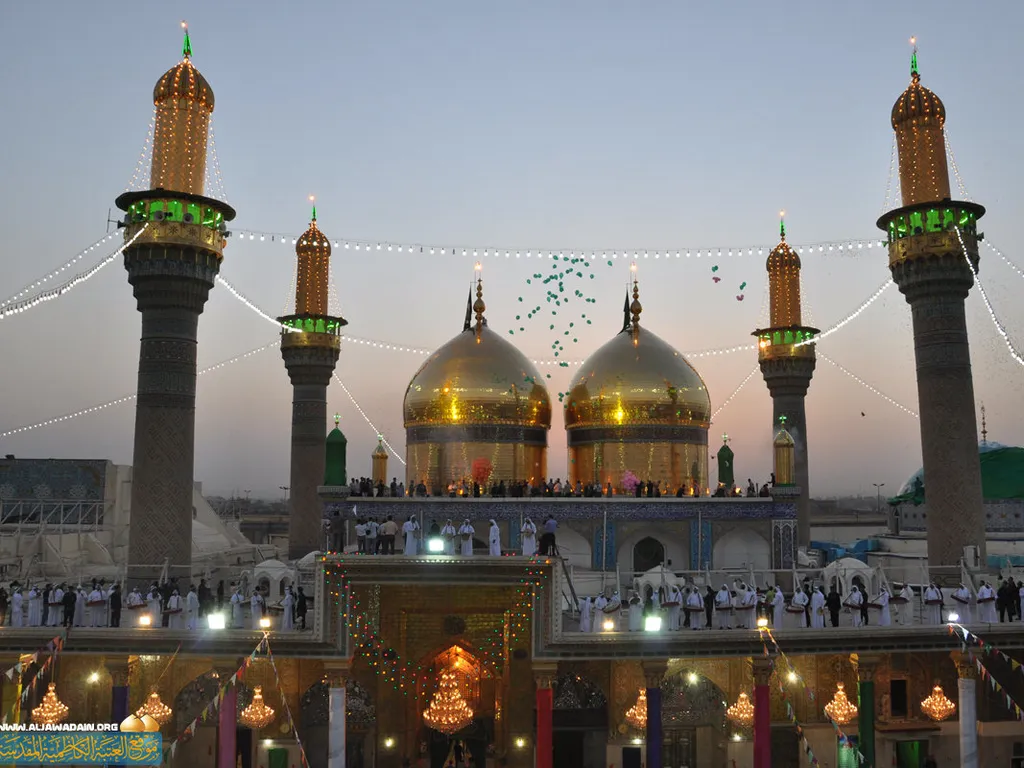
Imam al-Kazim & Imam al-Jawad Shrine
Location and Spiritual Significance
Nestled in the ancient district of Kadhimiya on the western bank of the Tigris River, the Shrine of the Two Imams — locally known as Al-Kadhimain — stands as one of the most spiritually charged destinations in all of Iraq. The surrounding neighborhood is among Baghdad's oldest quarters, a labyrinth of covered markets, incense-scented alleys, and centuries-old mosques that together form a living tapestry of Shia Islamic heritage. For believers, setting foot in Kadhimiya is an act of devotion; for travelers, it is an encounter with the living soul of Baghdad.
The shrine draws millions of pilgrims annually from across Iraq, Iran, South Asia, and the wider Muslim world, with the flow intensifying during major Shia commemorations such as Ashura and the death anniversaries of the two Imams. Non-Muslim visitors are also welcomed warmly, making this one of Iraq's most accessible sacred sites for international travelers seeking to understand the spiritual depth of this ancient land.
History: From Abbasid Cemetery to Sacred Shrine
The story of this site begins in 762 CE, when the Abbasid Caliph Abu Ja'far al-Mansur designated the area as a burial ground for the Quraysh tribe during the founding of Baghdad's legendary Round City. The ground shifted in sanctity in 799 CE, when Imam Musa al-Kadhim — the seventh of the Twelve Imams — was brought to rest here after years of imprisonment and eventual death under Caliph Harun al-Rashid. His honorific, al-Kadhim, meaning "the one who controls his anger," reflects a life of extraordinary patience in the face of relentless persecution — a quality that pilgrims still draw upon when they visit his tomb seeking solace and strength.
Thirty-six years later, in 835 CE, Imam Muhammad al-Jawad, the ninth Imam and grandson of al-Kadhim, was buried beside him. From this moment, the neighborhood took on the name Kadhimiya — City of the Two Kazims — and grew steadily around the shrine. The site endured tremendous trials over the centuries: it was destroyed during the sectarian riots of 1051 CE, and burned again during the catastrophic Mongol sack of Baghdad in 1258 CE. Each time, faith ensured its resurrection.
The present architectural form of the shrine dates to the early sixteenth century, built under the Safavid Shah Ismail I between 1502 and 1524 CE. Ottoman Sultan Suleiman the Magnificent later contributed to its ornamentation after capturing Baghdad in 1534, resulting in a magnificent fusion of Safavid Persian and Ottoman artistic traditions that defines the complex to this day.
Architecture: A Masterpiece of Islamic Art
Approaching the shrine from any direction, the eye is immediately captured by the two luminous golden domes rising above the city's rooftops, flanked by four towering gilded minarets. The domes are sheathed in over 9,000 bricks of pure gold, and on a clear Baghdad afternoon they radiate a warm brilliance that seems to draw the very sky downward. The overall composition — two great domes, four soaring minarets — creates a visual rhythm that has made Kadhimiya one of the most recognizable skylines in the Islamic world.
Inside, the experience deepens into something almost overwhelming. Walls are covered in intricate mirror mosaic (muqarnas) interlaced with tilework in turquoise, cobalt, and ivory. Kufic calligraphy scrolls across arches and pillars in gold leaf. Enormous chandeliers cast shimmering light across mirrored surfaces, transforming the interior into a space simultaneously regal and reverent. At the center of it all stands the gilded zarih — the ornate cage enclosing the tombs of the two Imams — where pilgrims press their hands against the metalwork and whisper prayers in an unbroken human chain stretching back over a thousand years.
The Human Experience: Pilgrimage and Community
No account of the Kadhimain Shrine is complete without describing the extraordinary humanity within it. The courtyards fill daily with pilgrims from dozens of nations — elderly women in black abayas leaning on canes, young men with tear-streaked faces, families from rural Iraq making their once-in-a-lifetime visit. The air carries a charge of raw emotion and sincere devotion that has moved even the most reserved traveler. Visitors frequently describe the experience as stepping outside time — a threshold between the everyday world and something far greater.
Beyond the shrine walls, the Kadhimiya district rewards exploration. The surrounding markets bustle with vendors selling prayer beads, saffron, dried fruits, traditional Iraqi sweets, and finely crafted religious items. Traditional restaurants and street carts offer Baghdad's most beloved dishes — from slow-cooked lamb to freshly baked samoon bread. The district is also home to theological schools and religious institutions that have shaped Shia scholarship for centuries, adding an intellectual dimension to its spiritual grandeur.
Visitor Tips
The shrine is open around the clock every day of the year and welcomes visitors of all faiths. Dress modestly — arms and legs should be covered, and women are asked to wear a headscarf. Early morning visits offer a calmer atmosphere and the most beautiful natural light on the golden domes. Photography is not permitted inside the shrine complex. The Kadhimiya district is located in northwestern Baghdad and is easily reached by taxi; local motorcycle trishaws also operate within the neighborhood. Combining this visit with the Abu Hanifa Mosque in the nearby Adhamiya district makes for a rich full-day exploration of Baghdad's sacred heritage.
Twin Golden Domes
Two magnificent domes sheathed in over 9,000 bricks of pure gold crown the shrine, flanked by four gilded minarets that make Kadhimiya one of the most iconic skylines in the Islamic world. At sunset, they radiate a warm luminescence visible from across Baghdad.
Resting Place of Two Imams
The shrine holds the tombs of Imam Musa al-Kadhim (d. 799 CE) and Imam Muhammad al-Jawad (d. 835 CE), the seventh and ninth Imams of Twelver Shia Islam. Pilgrims from around the world come to pray at the gilded zarih, seeking blessings and spiritual renewal.
Masterpiece of Islamic Art
Inside, the shrine dazzles with intricate mirror mosaics, Kufic calligraphy in gold leaf, and soaring chandeliers. The complex blends Safavid Persian and Ottoman artistic traditions in a visual harmony that has captivated visitors since the sixteenth century.
Living Kadhimiya District
The shrine anchors one of Baghdad's most vibrant historic neighborhoods, filled with spice markets, traditional sweets, prayer-bead vendors, and authentic Iraqi restaurants. Exploring the surrounding alleys of Kadhimiya is a journey into the living pulse of the city.
Centre of Shia Scholarship
Kadhimiya has functioned as a centre of Islamic theology and learning since the medieval era. The district's religious schools continue to attract students from across the Muslim world, giving the shrine visit an intellectual and cultural depth that goes beyond pilgrimage alone.