

The Nasiriyah Marshes
Where the Rivers Meet Legend
Nestled in the heart of southern Iraq, cradled between the legendary Tigris and Euphrates rivers, the Mesopotamian Marshes near Nasiriyah are among the most extraordinary places on Earth. Stretching across the Dhi Qar, Basra, and Maysan governorates, these vast wetlands — covering what was once up to 20,000 square kilometres — have nurtured human civilisation for over five thousand years. Designated a UNESCO World Heritage Site in 2016, the marshes are not merely a natural wonder; they are the living, breathing cradle of Mesopotamian civilisation itself.
Often called the Garden of Eden of the ancient world, the marshes rise dramatically from the surrounding desert: an explosion of emerald reeds, shimmering lakes, and winding waterways that seem to defy the arid landscape around them. This is where heaven and earth converge — a place ancient Sumerians believed to be the birthplace of the gods and the source of all life.
An Ancient Land Beyond Time
The marshes have witnessed the rise and fall of some of humanity's greatest civilisations. The ancient Sumerians regarded this region as sacred, weaving it into the very mythology of creation. The Epic of Gilgamesh, the oldest literary work known to mankind, was born in the cities that once stood at the edge of these shimmering waters. For millennia, the marshes sustained a way of life utterly unchanged by the passing of empires — a testament to nature's most enduring power.
In modern history, the marshes suffered devastating destruction. Under Saddam Hussein's regime, as much as 90% of the wetlands were systematically drained in the 1990s, displacing the indigenous Marsh Arab communities and threatening to erase one of the world's most remarkable ecosystems forever. After 2003, the people of the marshes broke the dikes themselves, and slowly — triumphantly — the waters returned. Today, the marshes stand as one of the world's most powerful symbols of resilience, recovery, and hope.
The Ma'dan: Keepers of Reed and Water
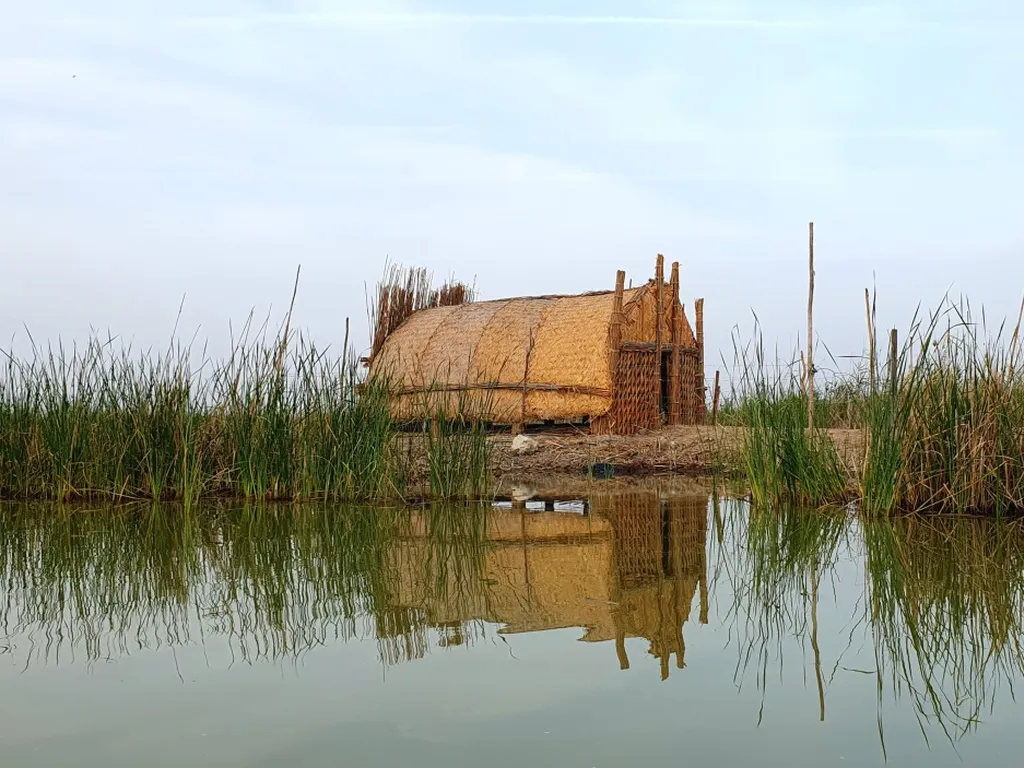
At the heart of the marshes lives the Ma'dan, the indigenous Marsh Arab community whose culture is unlike any other on Earth. For thousands of years, the Ma'dan have built their homes, their boats, and their entire way of life from the golden reeds that grow tall and dense around them. Their iconic mudhif — great arched guesthouses constructed entirely from bundles of giant reeds, without a single nail or external fastening — stand as architectural masterpieces that have endured for millennia, a testament to human ingenuity born of nature.
Navigating the waterways in sleek, low-slung mashoof boats, the Ma'dan fish the rich channels, herd their beloved water buffalo, and tend to their floating reed islands with the quiet confidence of people who belong completely to their landscape. Sharing a meal with a Ma'dan family — fresh fish grilled over an open fire, served with warm flatbread — is an experience that stays with you long after you have left.
A Wildlife Paradise Unlike Any Other
The Mesopotamian Marshes are one of the world's most critically important wetland ecosystems for biodiversity. Home to at least 40 species of fish, hundreds of thousands of waterbirds, and vast herds of water buffalo, the marshes form a vital corridor along the migratory route between Central Asia and Africa. Rare species such as the Basra Reed Warbler, the majestic Goliath Heron, and the African Darter find refuge here, making the marshes one of the Middle East's most exceptional birdwatching destinations.
Dawn over the marshes is nothing short of magical — the air alive with birdsong, mist rising in golden columns over the towering reeds, and the mirror-still surface of the water broken by leaping fish and wading egrets. This is nature at its most elemental, most primal, and most awe-inspiring.
Exploring the Marshes: Boats, Birds and Timeless Beauty
The classic way to explore the marshes is by mashoof — gliding silently through narrow channels flanked by walls of papyrus and reeds that tower over your head. Local guides from the town of Chibayish, the gateway community to the Central Marshes, lead visitors deep into the wetlands, where the modern world feels impossibly, gloriously far away. Overnight stays with Marsh Arab families can be arranged through specialist local operators, offering an immersive cultural experience that few travellers ever forget.
Just 40 minutes from Nasiriyah, the ancient Ziggurat of Ur — the best-preserved Sumerian temple in the world and part of the same UNESCO World Heritage listing — stands as the perfect companion to a marsh excursion. The combination of ancient archaeology and living wetland culture makes the Nasiriyah region one of the most layered, rewarding destinations in all of Iraq.
Planning Your Visit
The best time to visit is between October and April, when temperatures are mild and the marshes are at their most vivid and vibrant. Summer heat can be extreme, making outdoor activities uncomfortable. Most visitors base themselves in Nasiriyah and take day or overnight trips into the marshes. Comfortable guesthouses and local hotels are available in the city, and dedicated tour operators can arrange everything from mashoof boat tours to cultural homestays with Ma'dan families. Shared taxis are the most common form of local transport. Carry cash, dress modestly, and prepare for one of the most memorable journeys of your life.
Garden of Eden Legacy
The Mesopotamian Marshes were inscribed as a UNESCO World Heritage Site in 2016, recognised as one of the world's most significant wetland ecosystems. Fed by the Tigris and Euphrates rivers, they have nurtured human civilisation for over five thousand years — a landscape steeped in myth, history, and unmatched natural beauty.
Ma'dan Reed Houses
The indigenous Ma'dan people have inhabited these waters for millennia, constructing their iconic mudhif guesthouses — grand arched halls built entirely from reeds, without a single nail or fastening. Their way of life, centred on fishing, water buffalo herding, and reed craftsmanship, remains one of the most extraordinary living cultural traditions on Earth.
Mashoof Boat Tours
Glide through labyrinthine channels aboard a traditional mashoof boat, guided by locals who know every bend of the ancient waterway. Drifting silently between towering reed walls, with wildlife all around and the sky reflected in still water, is an experience unlike anything else in the world.
Wildlife Sanctuary
The marshes are home to over 40 fish species and hundreds of thousands of waterbirds, forming a critical corridor on the migratory route between Central Asia and Africa. Rare species such as the Basra Reed Warbler and the majestic Goliath Heron make this one of the Middle East's most important birdwatching destinations.
Gateway to Ancient Ur
Just 40 minutes from the marshes, the Great Ziggurat of Ur — a 4,500-year-old Sumerian temple and UNESCO World Heritage Site — stands in magnificent solitude on the plain. Combining a marsh excursion with a visit to Ur offers travellers one of the most profound cultural and historical journeys anywhere in Iraq.