

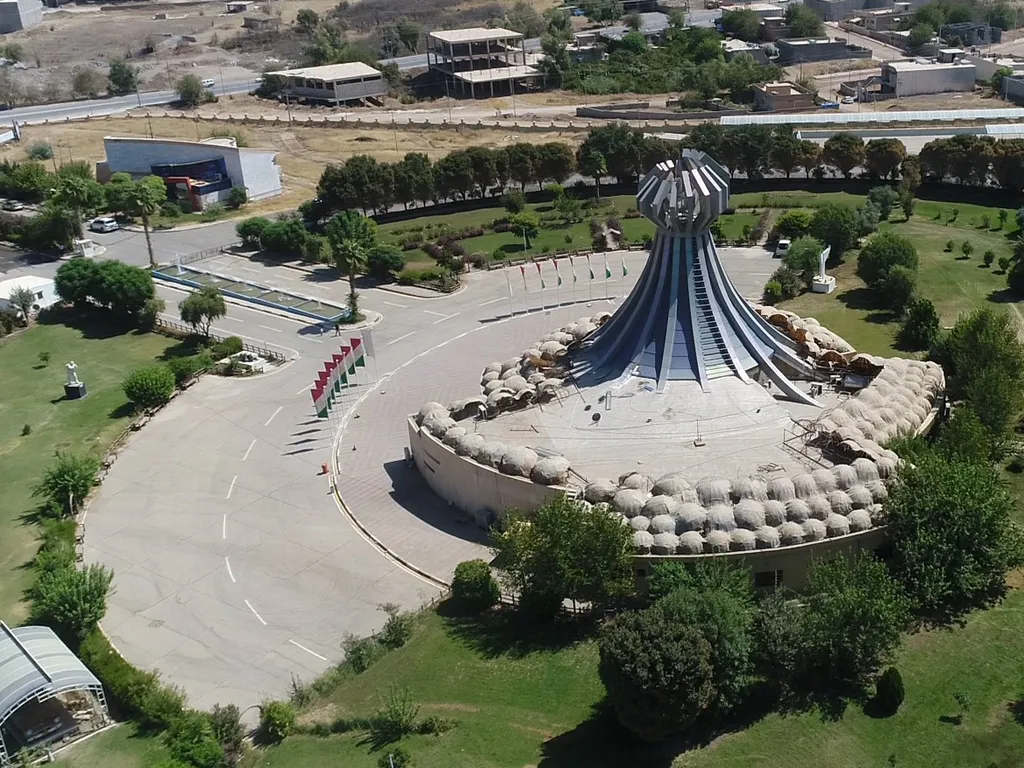
Halabja — Iraq's City of Resilience, Memory & Kurdish Beauty
Location & Overview
Nestled in the southeastern corner of the Kurdistan Region of Iraq, Halabja sits just seventeen kilometers from the Iranian border, cradled by the green arms of the Zagros Mountains. At roughly 700 meters above sea level, the city is fed by the Sirwan River and blessed with one of Iraq's highest annual rainfall levels — between 700 and 900 millimeters — which drapes its hills and plains in lush color across every season. In 2014, Halabja was elevated to the status of Iraq's 19th governorate, a political milestone that reflected the enduring spirit of its people in reclaiming dignity and recognition on their own terms.
Locals call their land Bawayanî — "the blessed land" — a name that speaks not only to its fertile orchards of pomegranates, figs, grapes, and walnuts, but also to the unbreakable spirit of a community that has refused, again and again, to be extinguished.
A History Etched in the Soul
Halabja's roots reach deep into antiquity. Archaeological excavations at the nearby site of Bakr Awa confirm ancient human settlements in this valley, and scholars believe the ancient city-kingdom of Lullubi may have once stood on or near this ground. Ottoman-era tombs discovered in 2009 push the city's formal history back to at least the seventeenth century.
Yet it is modern history that has most shaped Halabja's identity. On March 16, 1988, during the Al-Anfal campaign, Iraqi warplanes dropped chemical weapons on the city, killing more than 5,000 civilians in hours. In 2010, the Iraqi High Criminal Court officially recognized the massacre as genocide. But Halabja's story does not end in tragedy — it rises from it. Today the city stands as a testament to what a people can rebuild when memory becomes fuel rather than burden.
The Halabja Monument & Peace Museum
The Halabja Monument and Peace Museum is the spiritual and historical heart of any visit to the city. Standing as both memorial and celebration of survival, the museum holds photographs, artifacts, and documentary exhibitions that walk visitors through the events of 1988 and the decades of rebuilding that followed. The names of thousands of victims are inscribed on its walls — an eternal roster of those who deserved a longer story.
Each year on March 16th, the city transforms into a place of solemn commemoration. Streets are draped in black banners, schoolchildren recite poetry in honor of the martyrs, and visitors from across Iraq and the world come to pay their respects. As local tour guide Awara Jalal put it: "We don't want people to pity us. We want them to see how we live, not just how we suffered." Visit the monument in the morning for a more contemplative, uncrowded experience that allows the weight of history to settle fully.
Ahmad Awa Waterfall & the Hawraman Region
Just twenty-one kilometers northeast of Halabja lies one of Iraqi Kurdistan's most beloved natural treasures: the Ahmad Awa Waterfall. Tucked into a lush green valley through which the Zalm Stream rushes downward from the mountain heights, the waterfall draws nearly half a million visitors each year from across Iraq and the region. Walnut trees, pomegranate orchards, and grapevines shade the approach, keeping the air cool even at the height of summer. Below the cascades, teashops and local eateries line the riverbanks, filling the valley with the smoky aroma of Kurdish kebabs and the clinking of tea glasses.
Beyond Ahmad Awa stretches the even more remarkable Hawraman region — a mountainous landscape straddling the Iraq-Iran border, dotted with ancient villages where the Hawrami language is still spoken and traditional crafts like the hand-sewn Kurdish klash shoes are still made. The cultural landscape of Hawraman has been recognized by UNESCO as a heritage of exceptional value. Nearby, the Darbandikhan Dam — roughly forty kilometers from Halabja — offers a wide lake perfect for fishing, boating, and quiet picnics on the water's edge.
Kurdish Culture, Cuisine & the City's Living Soul
Halabja is not merely a place of memory — it is a city alive with culture, creativity, and pride. The Pasha Mosque, built in the seventeenth century by Grand Mohammed Pasha of the Jaff dynasty, is both a place of worship and a monument to Kurdish-Islamic heritage. The old Qaysari Bazaar buzzes with spice vendors, textile sellers, and artisans crafting traditional Kurdish goods — a sensory immersion into the rhythms of local life.
No visit is complete without tasting dolma (herb-stuffed grape leaves), slow-grilled kebabs, and saffron-fragrant biryani at one of the city's welcoming restaurants. Long a cradle of Kurdish poetry and literature, Halabja has produced writers whose words kept cultural identity alive through decades of hardship. Gullan Park, five kilometers east of the city, offers fresh springs, orchards, and tall trees perfect for a peaceful afternoon picnic.
Visitor Tips & Getting There
Halabja is approximately ninety kilometers from Sulaymaniyah International Airport, which offers international connections to major cities. Shared taxis run regularly from Sulaymaniyah to Halabja in roughly ninety minutes. The city has comfortable hotels and guesthouses; Sulaymaniyah or Erbil also serve as excellent bases for day trips. The tourist season runs from late March through December, with spring — when the mountains are carpeted in wildflowers and valleys run full with fresh water — being the most spectacular time to visit. Summer brings cooling highland breezes perfect for waterfall excursions, while winter offers dramatic snowscapes across the Zagros peaks.
Halabja Monument & Peace Museum
One of Iraq's most profoundly moving memorial sites, the Halabja Monument and Peace Museum combines documentary exhibitions, inscribed names of thousands of victims, and a powerful narrative of survival. Visited by travelers and scholars from around the world, it is the essential starting point for understanding the city's past and the strength of its people.
Ahmad Awa Waterfall
Cascading through a lush green valley twenty-one kilometers northeast of Halabja, Ahmad Awa is one of Kurdistan's most visited natural attractions, drawing nearly half a million visitors a year. Surrounded by walnut orchards, grapevines, and riverside teahouses, it offers a refreshing escape into nature that is as serene as it is spectacular.
Hawraman Valley
Stretching along the Iraq-Iran border near Halabja, the Hawraman region is a UNESCO-recognized cultural landscape of ancient villages, terraced hillsides, and living Kurdish traditions. Its cool summers, dramatic winter snowfall, and stunning scenery make it a destination for every season and every kind of traveler.
Pasha Mosque & Old Bazaar
The seventeenth-century Pasha Mosque, built by Grand Mohammed Pasha of the Jaff dynasty, is a jewel of Kurdish-Islamic architecture and a mausoleum to its founders. The surrounding bazaar hums with spice traders, textile weavers, and artisans crafting traditional Kurdish goods — an authentic window into the city's living heritage.
Darbandikhan Lake & Dam
Approximately forty kilometers from Halabja, the Darbandikhan Dam creates a sweeping lake perfect for fishing, boating, and picnicking against a backdrop of rolling hills. One of Iraq's most important water infrastructure projects, it also serves as a beloved leisure destination for families and nature lovers throughout the region.