

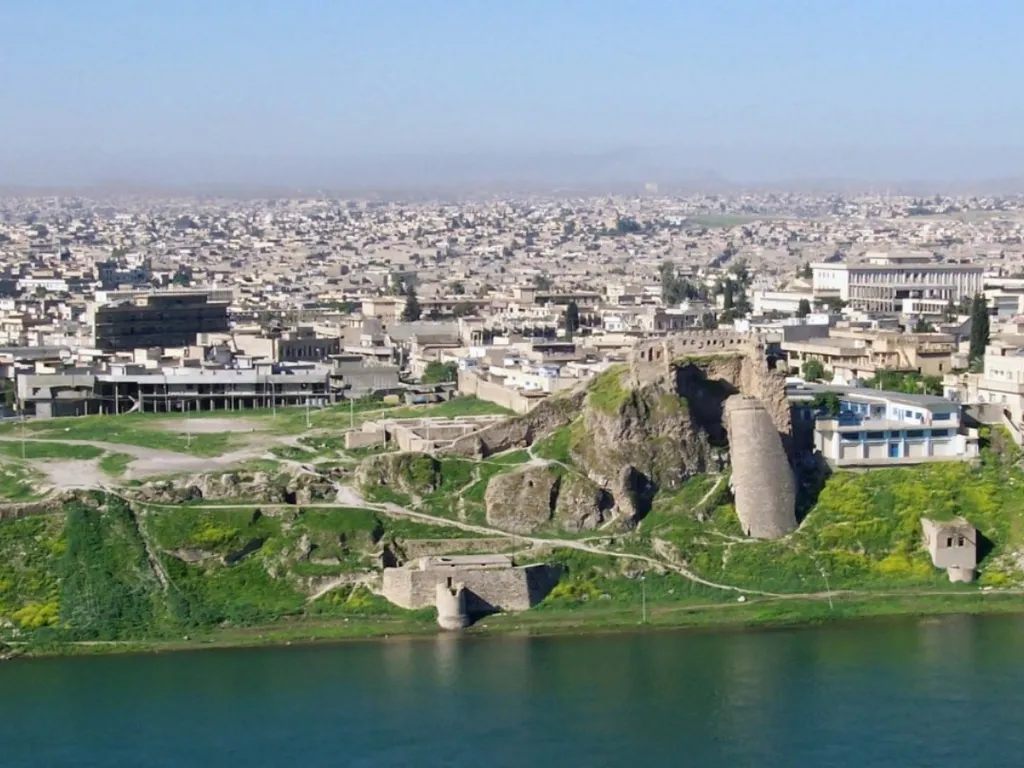
Mosul — The Bride of the Tigris
Location & Overview
Perched on the western bank of the Tigris River in northern Iraq, Mosul is the capital of Nineveh Governorate and the country's second-largest city after Baghdad. Its very name — derived from the Arabic word for "linking point" — encapsulates its historic role as a crossroads of civilizations, connecting the trade routes of East and West for thousands of years.
Here, the layers of time do not lie neatly one atop another — they bleed into each other. Ancient Assyrian ramparts face off with Ottoman minarets across the river; Syriac churches stand in the same neighborhoods as centuries-old mosques; and a new generation of Iraqis rebuilds, brick by careful brick, what was lost. To visit Mosul is to witness history in perpetual motion.
Ancient Nineveh — The Glory of Assyria
Cross the Tigris and you step into one of humanity's most extraordinary chapters. Ancient Nineveh, directly opposite the old city of Mosul, was once the largest metropolis in the world — the glittering capital of the Assyrian Empire at its 7th-century BC peak. Its walls stretched eight kilometers and enclosed palaces, temples, and gardens that astounded ancient visitors from every corner of the known world.
Within this storied ground, archaeologists uncovered the world's first library — the Royal Library of Ashurbanipal — containing tens of thousands of cuneiform clay tablets. Sennacherib's Palace, the great Ziggurat, and the city's restored monumental gates still stand as stirring evidence of a civilization that shaped the ancient world. UNESCO recognized the site's outstanding universal value, and its gates, painstakingly reconstructed, now welcome a new generation of curious travelers.
Al-Nouri Mosque & the Al-Hadba Minaret — A Symbol Reborn
Built in 1159 AD by Prince Mujahid al-Din Mahmoud, the Great Mosque of Al-Nouri has been the spiritual heart of Mosul for nearly nine centuries. Its minaret, Al-Hadba — meaning "the Hunchback" — earned its name from a graceful lean that developed in the 14th century, giving it a personality unlike any other minaret in the Islamic world. So beloved was this landmark that it graced the Iraqi 10,000-dinar banknote.
When the minaret was destroyed in 2017, it felt like the city itself had been erased. But in 2025, UNESCO's Revive the Spirit of Mosul initiative — funded by the United Arab Emirates (USD 50.4 million) and the European Union (€20 million) — completed its reconstruction using traditional methods and local hands. Over 2,800 young Iraqis were trained in restoration crafts as part of the effort. The minaret leans once again over the old city, a defiant symbol of what resilience and solidarity can accomplish.
Christian Heritage — Churches & Monasteries
Long before the Islamic conquest of the 7th century, Mosul was a heartland of Syriac Christianity. The Al-Tahera Church, a Syriac Catholic sanctuary originally opened in 1862 in the heart of the Old City, was painstakingly restored and reopened to the sound of choir hymns in September 2025. Hearing church bells ring once more over Mosul's rooftops, as UNESCO's Director-General observed, "sends the message that the city is returning to its true, plural identity."
Twenty kilometers to the north, perched on the summit of Mount Alfaf, Mar Matti Monastery dates to the 4th century AD and is one of the oldest functioning monasteries in the world. The drive up through the rugged Nineveh Hills rewards travelers with sweeping views and an atmosphere of serene, timeless devotion that is unlike anywhere else in Iraq.
The Old City & Its Bazaars
Mosul's old city is a place of contrasts — bullet-pocked walls alongside freshly plastered facades, quiet alleyways suddenly opening into the electric bustle of Bab Al-Jadeed market. Here, the sensory experience is overwhelming in the best possible way: the scent of grilled kebabs mingles with the sweetness of Mosuli knafeh — a golden, cheese-filled pastry drenched in syrup that locals will insist is the finest in all of Iraq (they are not wrong).
Browse stalls piled high with pistachios, hand-spun halva, artisan copperware, and fragrant spices that have passed through these markets for centuries. Strike up a conversation with a vendor, share a glass of traditional zabib raisin juice, and you will quickly understand why every traveler who visits Mosul ends up staying an extra day.
Visitor Tips & Getting There
The best seasons to visit Mosul are spring (March to May) and autumn (September to November), when the climate is mild and ideal for exploring archaeological sites and strolling through the old city. Travelers can reach Mosul by flying into Erbil International Airport and continuing overland, or by road from Baghdad. A certified local guide is highly recommended — not only for navigating history with depth and context, but for unlocking the warm, genuine hospitality that makes Mosul one of Iraq's most memorable destinations. Come with curiosity, leave with a piece of your heart behind.
Ancient Nineveh Ruins
Once the largest city in the world, ancient Nineveh lies directly across the Tigris from Mosul's old city. Its towering restored gates, eight kilometers of ancient walls, and the site of humanity's first library offer an awe-inspiring journey into the heart of the Assyrian Empire — a UNESCO-recognized treasure.
The Al-Hadba Minaret Reborn
The beloved leaning minaret of Al-Nouri Mosque, destroyed in 2017, was rebuilt by Iraqi craftspeople through UNESCO's landmark restoration program and reopened in 2025. Once again gracing the Mosul skyline with its distinctive tilt, it stands as the city's most powerful symbol of recovery and hope.
Ancient Churches & Monasteries
From the beautifully restored Al-Tahera Syriac Catholic Church in the Old City to the 4th-century Mar Matti Monastery atop Mount Alfaf, Mosul's Christian heritage is centuries deep. These sacred sites tell a story of pluralism and peaceful coexistence that defines the city's truest identity.
Old City Bazaars
Bab Al-Jadeed market pulses with the flavors and sounds of a city refusing to be silenced — sizzling kebabs, golden Mosuli knafeh, raisin juice, and hand-crafted goods spilling out of ancient alleyways. Mosul's markets are not just places to shop; they are where the city's warm soul is on full display.
UNESCO's Revive Mosul Initiative
A landmark international partnership involving UNESCO, the UAE, and the EU channeled over $70 million into Mosul's reconstruction, training more than 2,800 young Iraqis in traditional restoration trades. Visiting Mosul today means directly participating in and celebrating one of the world's most inspiring cultural recovery stories.