

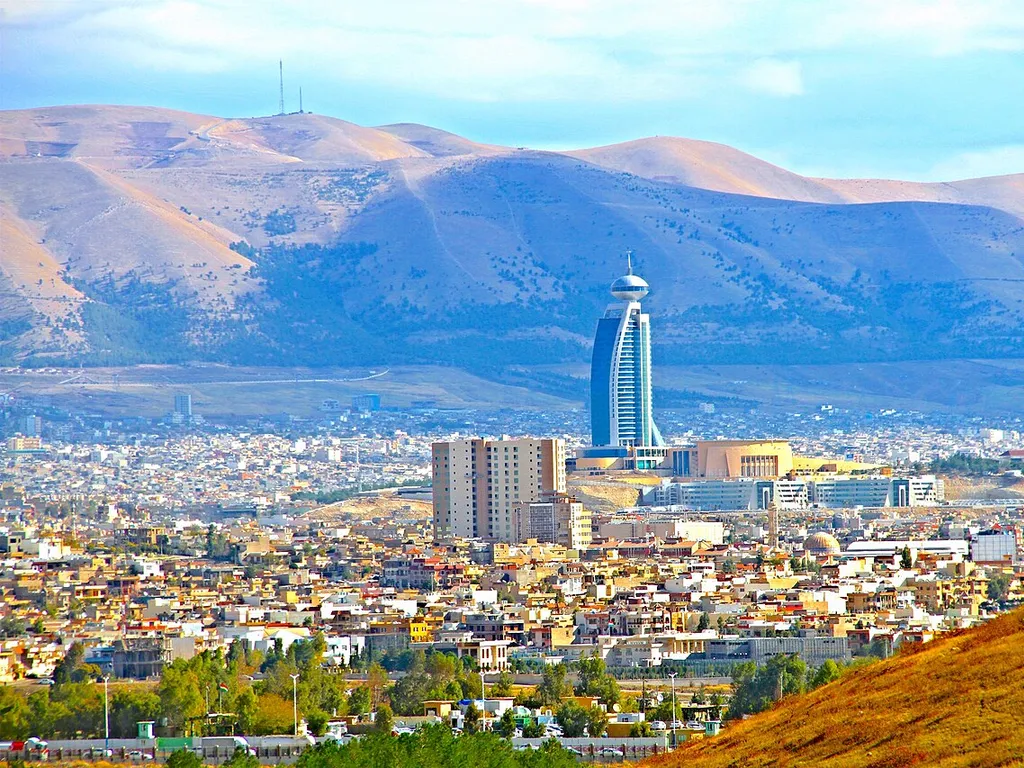
Sulaymaniyah — The Cultural Capital of Iraqi Kurdistan
Location & Natural Setting
Sulaymaniyah — known locally as Slemani — rests in the heart of Iraqi Kurdistan, approximately 355 kilometres northeast of Baghdad, at an elevation of around 882 metres above sea level. The city is cradled by a dramatic ring of mountains: Azmar, Goizha, and Qaiwan rise to the northeast, while Mount Baranan anchors the south. This highland embrace gifts the city with cool, refreshing summers and snowy winters — a striking contrast to the scorching plains below, and one of the main reasons Sulaymaniyah has become the favourite summer retreat for travellers from across Iraq.
To the west, the lush Sharazur Plain — one of the most fertile in the entire Middle East — stretches out in golden and green abundance. It is a landscape that has inspired poets for centuries, and one that immediately signals to any visitor that this is a place where beauty is taken seriously.
Foundation & History
Sulaymaniyah was officially founded on 14th November 1784 by the Kurdish Emir Ibrahim Pasha Baban, who named the city in honour of his father, Sulayman Pasha, a revered prince of the Baban dynasty. From its very first days, Ibrahim Pasha envisioned it as a grand cultural and commercial capital, inviting artisans, merchants, and intellectuals from across Kurdistan to settle within its newly built bazaars and palatial quarters. The city flourished rapidly, becoming the seat of the Kurdish Baban Emirate and a beacon of civilisation in the region.
Through the 19th and 20th centuries, Sulaymaniyah endured periods of great upheaval but emerged each time with its cultural identity intact and even stronger. It became a crucible of Kurdish nationalism, a refuge for thinkers and revolutionaries, and a city that has always placed education and art at the heart of its identity. Today, more than 240 years after its founding, the city is home to nearly one million people and hosts two public and five private universities, cementing its role as one of Iraq's great intellectual centres.
A UNESCO Creative City of Literature
No distinction better captures the soul of Sulaymaniyah than its designation as a UNESCO Creative City of Literature — the only city in the entire region to hold this prestigious title. For generations, Slemani has been a sanctuary for poets and writers who shaped the Sorani Kurdish literary tradition. Names like Nali, Mawlawi, Piramerd, Bekas, and Sherko Bekas are not just historical figures here; they are woven into the daily conversation, celebrated in street names, statues, and public readings.
This literary atmosphere is palpable the moment you arrive. Bookshops crowd the pavements. Art galleries dot the old quarters. Coffee houses hum with debate and storytelling. It is precisely this open, creative, and intellectual spirit that has earned Sulaymaniyah its affectionate epithet: the Paris of Iraq.
Must-See Landmarks
No visit to Sulaymaniyah is complete without stepping inside Amna Suraka — the Red Museum. Once the fearsome headquarters of Saddam Hussein's intelligence services, this former prison has been transformed into one of Iraq's most powerful museums. Its crowning centrepiece is the breathtaking Hall of Mirrors, an installation of 182,000 shards of glass and thousands of lights that shimmers like a galaxy of souls, each fragment representing a life lost within these walls. It is deeply moving and utterly unforgettable.
Equally unmissable is the Sulaymaniyah Museum, the second-largest museum in all of Iraq after the National Museum in Baghdad. Its vast collections span Mesopotamian, ancient Kurdish, and Persian civilisations, with artefacts dating as far back as 1792–1750 BC. Entry is free, making it one of the most welcoming cultural institutions in the country.
In the city's older quarters, Sara Square (Saray Azadi) serves as the social and historical heart of Slemani — a place to sit, watch, and absorb the rhythm of local life. The Grand Bazaar nearby is a sensory delight: a labyrinth of stalls selling hand-woven Kurdish textiles, aromatic spices, honey, dried fruits, and traditional sweets, all accompanied by the clink of tea glasses from the traditional chai houses tucked inside.
Nature & Adventure
The landscapes surrounding Sulaymaniyah are extraordinary. Mount Azmar dominates the city's skyline and is home to the Chavi Land complex — considered one of the largest tourist destinations in the Middle East — featuring a wax museum and a cable car that lifts visitors high above the rooftops for panoramic views that stretch to the horizon. In winter, the mountain is dusted in white snow; in summer, it provides a cool, pine-scented escape.
Just 13 kilometres from the city, the Hazar Merd Caves (Cave of a Thousand Men) open a window onto Palaeolithic history, with evidence of human habitation stretching back 50,000 years. Further afield, Dukan Lake — the largest lake in the Kurdistan Region — and the spectacular Ahmad Awa Waterfalls offer world-class natural retreats perfect for a day trip or weekend escape.
Visitor Tips
The ideal times to visit Sulaymaniyah are spring (March–May), when the mountains burst into bloom and the Nowruz New Year celebrations fill the city with colour and music, and autumn (September–November), when temperatures are pleasantly mild. The city is served by Sulaymaniyah International Airport, with daily flights connecting it to cities across Iraq and internationally. Sulaymaniyah is widely regarded as one of the safest cities in the region. The local currency is the Iraqi Dinar (IQD); cash is essential for bazaars and traditional restaurants. Sorani Kurdish is the primary language, though Arabic and some English are widely understood.
Amna Suraka Red Museum
Once a feared Ba'athist prison, Amna Suraka has been reborn as one of Iraq's most powerful museums. Its extraordinary Hall of Mirrors — made from 182,000 glass shards and thousands of lights — creates a haunting, galaxy-like memorial to lives lost. It is the single most emotionally resonant stop in the city, and one no visitor should miss.
Sulaymaniyah Museum
Iraq's second-largest museum holds an extraordinary collection of Mesopotamian, Kurdish, and ancient Persian artefacts, with some pieces dating back to 1792–1750 BC. Free to enter, it offers a sweeping journey through thousands of years of civilisation in the span of a single afternoon — a must for any history lover.
Mount Azmar & Chavi Land
Azmar Mountain frames Sulaymaniyah's skyline and rewards visitors with a cable car ride delivering panoramic views over the entire city. The vast Chavi Land complex below is home to a wax museum and extensive family attractions. In winter, snowfall transforms the peak into a magical white landscape that draws visitors from across the country.
The Grand Bazaar
Sulaymaniyah's Grand Bazaar is a sensory feast — a maze of stalls layered with the scents of cardamom, saffron, and fresh herbs alongside hand-woven Kurdish carpets and glittering jewellery. Duck into one of the old chai houses inside the market for a glass of sweet tea and a glimpse of authentic local life that has changed little over centuries.
UNESCO City of Literature
As the region's only UNESCO Creative City of Literature, Sulaymaniyah wears its intellectual heritage with quiet pride. The city has nurtured generations of celebrated Kurdish poets and thinkers, and that spirit lives on in its bookshops, galleries, cultural festivals, and the philosophical conversations that spill out of its many coffee houses. Come here to understand the Kurdish soul.