

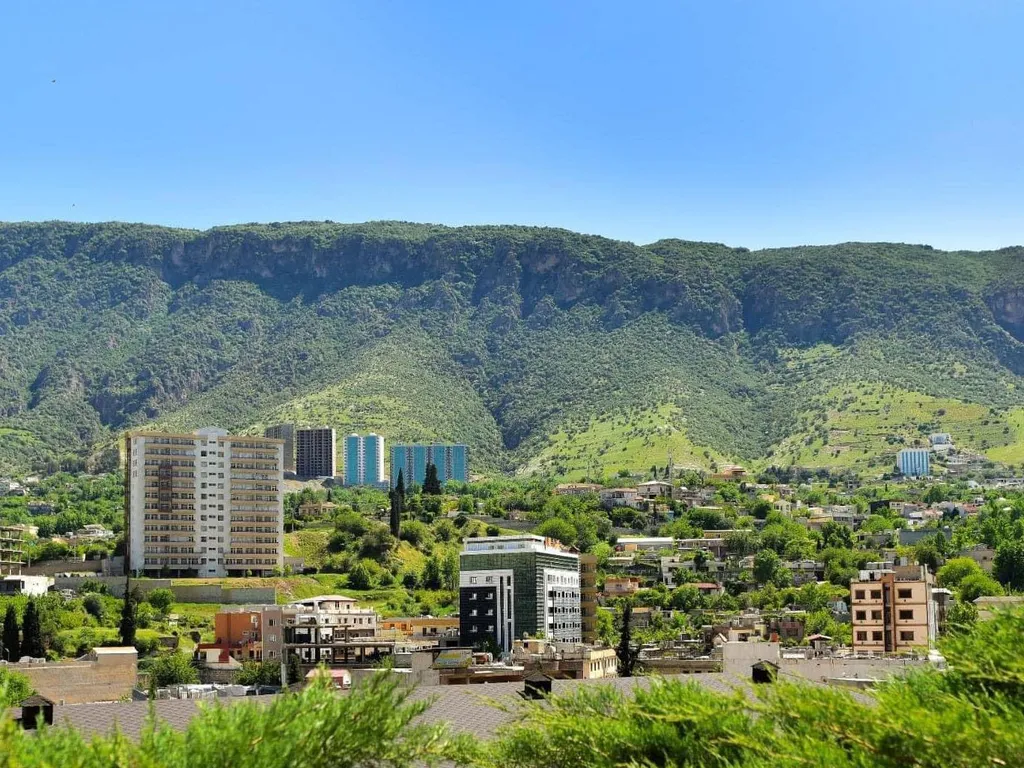
Shaqlawa
The Pride of Kurdistan
Halfway between Erbil and the high peaks of the Zagros Mountains, the city of Shaqlawa appears like a painting conjured from imagination: slopes draped in oak and fruit trees, cool damp air carrying the scent of earth after rain, and a sense of timeless quiet broken only by birdsong and the bustle of its lively markets. Sitting 1,066 metres above sea level between the towering walls of Mount Safeen to the west and Mount Sork to the east, Shaqlawa lies just 51 kilometres northeast of Erbil, the capital of Iraqi Kurdistan. It is little wonder that locals have long called it the "Bride of Kurdistan" and the "Pride of Kurdistan" — both at once.
Shaqlawa is far more than a summer retreat from the plains. It is a living city with a deep identity, where the sounds of open-air markets blend with the birdsong of mountain valleys, and where Kurdish Muslims and Assyrian Christians have shared streets and feast days for centuries. Visitors come year-round: in spring when wildflowers carpet the hillsides, in summer when families from Baghdad, Basra, and the Gulf seek respite from the heat, and in winter when snow transforms Safeen into a white wilderness of extraordinary beauty.
A Town with Ancient Roots
Shaqlawa's story reaches back through layers of history. The area was shaped by successive waves of Assyrian, Babylonian, and later Islamic civilisations, each leaving traces in its architecture, traditions, and spiritual life. In the sixteenth century, the Soran Emirate stamped its most dramatic mark on the region when Princess Khanzad — celebrated as the Kurdish Warrior Queen — built her formidable citadel just 22 kilometres from Erbil along the road to Shaqlawa. Constructed from stone and gypsum, with four round towers anchoring its corners, the castle served both as a royal residence and a strategic stronghold. Khanzad went on to rule the Soran Emirate for seven years after her brother's death — building roads, schools, and mosques — and her castle still stands as a monument to her legacy.
On the slopes above the town, the Shrine of Raban Boya gazes over the valley of Mount Safeen. Revered equally by Christians and Muslims, this ancient pilgrimage site encapsulates the spirit of tolerance that has long defined Shaqlawa's social fabric.
Mount Safeen: A World of Its Own
Rising to 1,828 metres, Mount Safeen dominates the skyline of Shaqlawa and accounts for much of its magic. Its slopes offer hiking trails for every level of fitness, from family strolls through oak woodland to technical sport-climbing routes on the limestone ridgeline at its southwestern edge. From the summit, a sweeping panorama unfolds across the valleys of Shaqlawa, the scattered farm terraces below, and the distant outline of the Harir plain. Hidden within the mountain's folds is the Music Valley — named for the natural symphony of birdsong that fills its air — a serene retreat for those seeking solitude and walking meditation away from the town's energy. ATV adventures and guided mountain-bike routes along the Safeen ridgeline have made the mountain increasingly popular with adventure travellers in recent years.
Landmarks and Sacred Sites
Beyond Mount Safeen, Shaqlawa's heritage unfolds across a collection of remarkable landmarks. The Shrine of Raban Boya (Sheikh Wso Rahman) crowns a hillside an hour's walk above the town, rewarding pilgrims and hikers alike with views that stretch across the whole valley. The Virgin Mary Church, established in 1965, anchors the town's Assyrian community and stands as a testament to the region's enduring Christian heritage. On the road toward Erbil, Khanzad Castle perches on a limestone hill overlooking the vast Harir plain, its silhouette unmistakably medieval against an open sky. Deeper into the mountains, the lesser-visited Dwayne Castle hides amid orchards on the western side of Mount Serbn, another relic of the Soran Emirate waiting to be explored.
Flavours, Markets, and Kurdish Hospitality
No visit to Shaqlawa is complete without losing yourself in its bazaars. The main street hums with shops selling the town's celebrated mountain honey — produced from Zagros wildflowers and prized across Iraq — alongside walnuts, dried apricots, figs, hand-pressed jams, and the legendary mann wa salwa, a traditional sweet that shopkeepers will tell you with a wink was the very manna sent down from heaven. Restaurants line the valley's edges, many with open terraces hanging over the mountainside, where you can savour Testi Kebab (meat and vegetables slow-cooked in a sealed clay pot), Dolma stuffed with herb-flecked rice, and Kuba dumplings — all washed down with the strong, amber tea that is the cornerstone of Kurdish hospitality. The market is also an excellent place to find hand-woven textiles and traditional Kurdish garments crafted by local artisans.
Planning Your Visit
The ideal seasons for visiting Shaqlawa are spring (March–May), when blossoms transform every hillside into colour, and autumn (September–November), when the air is crisp, the crowds thin, and the light is golden. Winter offers a quieter, snowier experience for the adventurous traveller. From Erbil, buses and shared taxis depart regularly from the main station near the Citadel; the journey takes approximately one hour. Taxis can also be hired privately for around 15,000–20,000 Iraqi Dinars. Shaqlawa has a wide range of accommodation, from budget guesthouses to upmarket mountain resorts. Pack comfortable footwear for exploring Safeen's trails, and bring a jacket even in summer — evenings at altitude grow cool quickly. Shaqlawa is one of the most welcoming destinations in Iraq, and its multicultural community will make every visitor feel genuinely at home.
Mount Safeen
Rising to 1,828 metres, Mount Safeen is the dramatic backdrop to all of Shaqlawa. Its slopes offer hiking trails for all abilities, limestone sport-climbing routes, and the hidden Music Valley — a bird-filled sanctuary that rewards those willing to wander off the beaten path with extraordinary panoramas.
Shrine of Raban Boya
Perched on the heights of Mount Safeen after an hour's mountain walk, the Shrine of Raban Boya is one of Iraqi Kurdistan's most touching pilgrimage sites. Revered by both Christians and Muslims, it symbolises the centuries-old tradition of religious tolerance that defines Shaqlawa, and rewards visitors with sweeping views across the valley.
Khanzad Castle
Built in the sixteenth century by the legendary Princess Khanzad of the Soran Emirate, this stone citadel stands on a hillside 22 kilometres from Erbil with four corner towers and commanding views over the Harir plain. Its story — of a woman who ruled, defended, and built — is as captivating as the architecture itself.
Bazaars and Mountain Honey
Shaqlawa's market street is a feast for the senses. Rows of shops overflow with the town's prized mountain honey, locally dried apricots and figs, hand-made jams, walnuts, and the legendary mann wa salwa sweet. Browsing the bazaar is as much a cultural experience as a culinary one, offering a window into everyday life in the Kurdish highlands.
Kurdish Cuisine
Shaqlawa's restaurants serve some of the finest traditional Kurdish cooking in the region: Testi Kebab slow-cooked in a sealed clay pot, herb-fragrant Dolma, and golden Kuba dumplings — all enjoyed on open terraces with mountain views. Pair everything with a glass of strong Kurdish tea and the experience becomes unforgettable.